
Entina Tina2C
4.4Editor score
Beginner friendly
STEM learning apps
Compact mini size
Discover the top 3D printer for educational use options for classrooms and STEM labs. We compare speed, safety, ease of use, and features to help you choose.
Choosing the right 3D printer for educational use is critical for engaging students in STEM learning. Modern machines offer ease of use and safety features that make them perfect for classrooms and home labs.
We compared ten top models based on speed, safety, software support, and student friendliness. Our analysis focuses on reliability and educational value to ensure you select the best tool for your needs.
Each pick highlights unique strengths like multi-color printing, auto leveling, or enclosed safety. Prices change frequently, so verify current listings before purchasing to ensure you get the best value available.
4.4Editor score

4.7Editor score

4.6Editor score
This side-by-side comparison highlights key specs for every model. Check build volume, speed, safety features, and ease of use to find the perfect fit for your educational environment.





The Bambu Lab A1 stands out as the top pick for educational environments due to its balance of speed and ease of use. With a high rating of 4.7, it delivers exceptional precision and reliability for classroom projects.
We may earn a commission when you buy through this link, at no additional cost to you.
Its full-auto calibration eliminates the need for manual bed leveling, ensuring students can start printing quickly without frustration. The active flow rate compensation guarantees smooth prints, reducing waste and failed attempts significantly.
While the AMS for multi-color printing is sold separately, the base unit is robust and quiet enough for busy classrooms. The quick swap nozzle simplifies maintenance, allowing teachers to focus on curriculum rather than troubleshooting.
Educators looking for a reliable, high-performance machine that minimizes downtime will find the A1 an excellent investment. It empowers students to explore complex designs with confidence.
The automatic calibration handles Z-offset and bed leveling, letting students focus on design rather than mechanics.
Active motor noise canceling ensures the printer runs quietly, preventing distractions during lessons or study time.
We may earn a commission when you buy through this link, at no additional cost to you.
The Entina Tina2C is designed specifically for young learners, offering a streamlined experience that starts in just eight minutes. With a 4.4 rating, it proves effective for introducing 3D printing concepts without technical barriers.
We may earn a commission when you buy through this link, at no additional cost to you.
Its integration with the Poloprint Cloud app provides over 3000 models and 20+ creative modules, making it a comprehensive tool for STEM education. The app guides users through setup and printing, reducing teacher workload.
While the 3.9 cubic inch print volume limits larger projects, it is perfect for small, quick prototypes often used in classroom settings. The compact size ensures it fits easily on desks or shared workspaces.
For schools or homes prioritizing affordability and ease of use, the Tina2C is an ideal entry point. It transforms screen time into hands-on learning experiences effectively.
Regularly updated STEM learning courses and interactive tools help educators integrate 3D printing into lessons easily.
Support for both WiFi and TF card printing allows printing in networks with limited connectivity.
We may earn a commission when you buy through this link, at no additional cost to you.
The Ugee Funbox redefines educational printing with its UL GREENGUARD certification and safety features. Rated 4.6, it ensures a safe environment for children with anti-pinch doors and HEPA filtration.
We may earn a commission when you buy through this link, at no additional cost to you.
Its unique AI engines allow kids to turn text, photos, and voice into printable models, fostering creativity without needing CAD skills. The included library of 12000+ toys provides endless inspiration for projects.
Although it supports only single-color printing, the ability to assemble multi-part creations encourages engineering thinking. The enclosed body protects fingers, making it ideal for younger age groups or busy classrooms.
For institutions prioritizing safety and engagement, the Funbox offers a premium experience. It transforms passive entertainment into active creation and problem-solving.
Enclosed body with anti-scald exterior and HEPA filters protects children and ensures clean air.
Text, photo, and voice-to-print features allow students to create designs using natural language.
We may earn a commission when you buy through this link, at no additional cost to you.
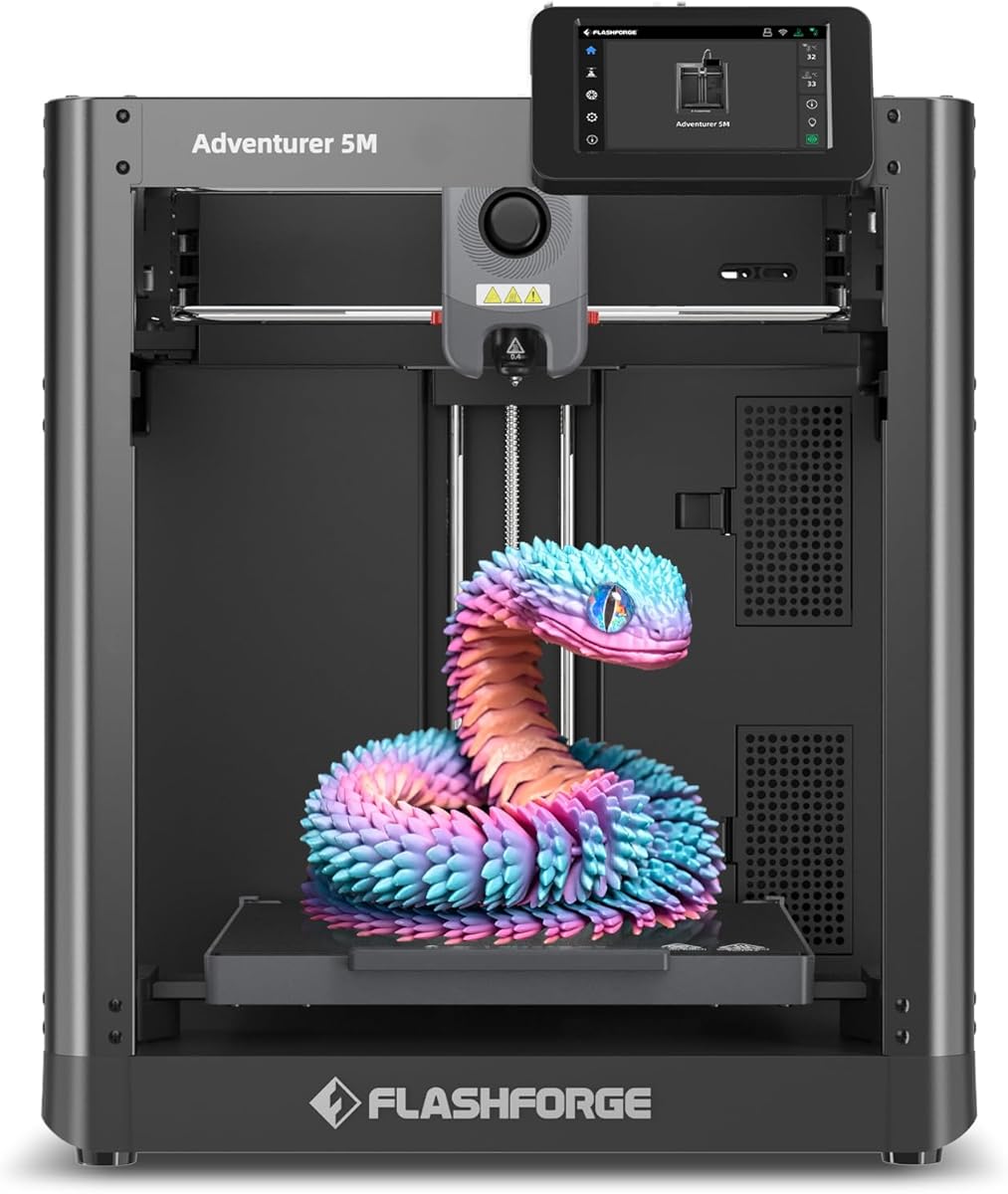
The FLASHFORGE Adventurer 5M prioritizes speed with a 600mm/s max rate. It features auto leveling to simplify setup for students and teachers. The 280C direct extruder supports various materials.
We may earn a commission when you buy through this link, at no additional cost to you.
Its CoreXY all-metal structure ensures stability during high-speed printing. The three-second detachable nozzle allows for quick maintenance without tools. This reduces downtime in busy lab environments significantly.
The 220mm build volume is standard for educational use. While the rating is slightly lower, the performance per dollar is competitive for those needing quick turnaround on projects.
Educators needing high throughput for prototyping will appreciate the speed. It balances efficiency with ease of use for classroom settings.
Max speed of 600mm/s reduces wait times for students, allowing more iterations per class.
Nozzle changes take just three seconds, keeping students engaged during the printing process.
We may earn a commission when you buy through this link, at no additional cost to you.
The Bambu Lab P1S brings advanced features to education with its enclosed body. Rated 4.5, it supports engineering materials while maintaining safety for students. Auto bed leveling ensures success from the first print.
We may earn a commission when you buy through this link, at no additional cost to you.
Its design allows printing of ABS and ASA which need stable temperatures. Setup takes only 15 minutes, letting classrooms start projects immediately. This saves valuable preparation time for teachers.
Multi-color capability is available with the optional AMS, expanding creative potential for student designs. The high speed ensures models are ready quickly even for complex shapes or assemblies.
For labs exploring engineering materials, the P1S is a strong choice. It combines safety with professional-grade performance for advanced learning.
Enclosed design keeps temperature stable for ABS and ASA, allowing more robust projects.
Ready to print in just 15 minutes ensures minimal downtime between classes.
We may earn a commission when you buy through this link, at no additional cost to you.
The FLASHFORGE AD5M focuses on reliability with its one-click leveling and power loss resume. Rated 4.3, it prevents wasted filament during unexpected interruptions. CoreXY structure ensures stable high-speed printing.
We may earn a commission when you buy through this link, at no additional cost to you.
Remote monitoring via the Flash Maker APP lets teachers track progress from anywhere. This is useful for supervising multiple printers or long prints without constant physical checks.
The tool-free nozzle change simplifies maintenance, keeping printers running longer. The flexible PEI plate makes removing prints easy for students. This avoids damage to prints or build surface.
Educators needing dependable performance and remote oversight will appreciate these features. It balances cost and advanced functionality effectively.
Real-time print status and alerts allow teachers to monitor prints from their offices.
Auto-saving and resuming prevents lost time and material when power fluctuates.
We may earn a commission when you buy through this link, at no additional cost to you.
The Bambu Lab P2S Combo enables multi-color printing which adds engagement. Rated 4.7, it uses the AMS 2 Pro to manage colors automatically. Filament drying keeps materials in optimal condition.
We may earn a commission when you buy through this link, at no additional cost to you.
Adaptive airflow balances cooling for overhangs or heat for engineering parts. This versatility lets students experiment with diverse materials. Failure detection alerts before a print fails completely.
The high-speed printing ensures that multi-color parts are produced quickly. AI failure detection helps maintain quality in student projects. This builds confidence in the printing process.
For advanced labs, this combo offers professional capabilities. It brings multi-color creativity and engineering material support to the classroom.
AMS 2 Pro manages color changes automatically, allowing complex designs without manual swaps.
Dry and airflow systems ensure high-quality prints with sensitive or engineering materials.
We may earn a commission when you buy through this link, at no additional cost to you.
This Adventurer 5M variant focuses on reliability with one-click leveling and power loss recovery. Rated 4.3, it ensures consistent quality. Vibration compensation eliminates ghosting for clean edges.
We may earn a commission when you buy through this link, at no additional cost to you.
The 50W heating power reaches 200C in 35 seconds. Fast warm-up reduces wait time for students. Dual-sided PEI plate supports different materials and easy removal.
Filament run-out sensor prevents wasted material mid-print. This protects students from frustration. It ensures that projects complete even if a spool runs out unexpectedly.
For classrooms needing consistent results and quick setup, this model fits well. It offers a balanced solution for general educational printing needs.
Vibration compensation ensures smooth surfaces free of artifacts even at high speeds.
Run-out sensors and recovery resume ensure minimal waste when materials run low.
We may earn a commission when you buy through this link, at no additional cost to you.
The Snapmaker U1 offers true multi-material printing with four independent toolheads. Rated 4.5, it reduces waste by switching heads in five seconds. This is rare in educational settings.
We may earn a commission when you buy through this link, at no additional cost to you.
Students can combine rigid and flexible materials in one print. This opens new design possibilities. Smart calibration ensures accuracy across different toolheads easily.
The built-in model library helps beginners start immediately. Remote control via app allows monitoring without interrupting work. This is ideal for managing multiple stations.
For advanced makers and vocational training, the U1 offers versatility. It supports complex functional prototypes and mixed-material learning.
Print with different materials like rigid and flexible together for functional prototypes.
Tool changes take only five seconds, reducing waste and increasing throughput.
We may earn a commission when you buy through this link, at no additional cost to you.
The Bambu Lab A1 Mini brings A1 features to a smaller footprint. Rated 4.2, it is ideal for shared labs or desks. Multi-color printing is available with the AMS Lite combo.
We may earn a commission when you buy through this link, at no additional cost to you.
Auto calibration simplifies setup for students. Quick swap nozzle allows easy maintenance during classes. The compact size ensures it fits in constrained spaces easily.
While build volume is smaller, it is sufficient for most educational projects. The quiet motor noise cancellation reduces classroom disruption. This keeps the learning environment calm.
For schools with limited space, this mini version is a smart solution. It maintains performance while fitting tight constraints.
The smaller footprint allows placement on shared desks or crowded classroom shelves.
Motor noise cancellation ensures printing does not disturb students during lessons.
We may earn a commission when you buy through this link, at no additional cost to you.
Selecting a printer for education requires weighing features against practical constraints. This guide explains the critical factors to consider for classrooms.
In educational settings, the time required for setup directly impacts learning time. Look for machines with automatic bed leveling and intuitive interfaces that minimize manual adjustments. Pre-assembled models allow students to focus on design rather than mechanical troubleshooting.
Prioritize models with guided setup processes and clear on-screen instructions to reduce teacher workload.
Safety is paramount when children are operating equipment. Enclosed printers protect fingers from hot parts and prevent accidental contact with moving nozzles. Look for certifications like UL GREENGUARD Gold to ensure low emissions and clean air.
Choose printers with anti-pinch features and cool-touch exteriors to ensure a safe environment for all users.
Supporting software should be intuitive and accessible. Platforms with built-in model libraries or AI tools accelerate the learning curve. Resources such as video courses or STEM modules add value to the hardware investment significantly.
Ensure the software supports your school's OS and offers cloud connectivity for easy file management.
Educational environments need consistent performance to avoid frustrating failed prints. Features like auto-calibration and power loss resume help maintain uptime. Reliable machines ensure that students can complete projects without needing technical intervention.
Opt for models with proven track records for calibration stability and automated maintenance to ensure success.
Faster printing allows for rapid prototyping and iterative learning. A higher throughput ensures multiple students can work within a class period. Consider the build volume to ensure it accommodates the project sizes you plan to introduce.
Balance speed with precision to ensure quality while keeping wait times manageable for students.
Adding color or materials expands creative possibilities for students. Systems with automatic tool changing or multi-filament support bring designs to life without manual swaps. This fosters deeper understanding of engineering and design constraints.
Consider whether multi-color capabilities align with your curriculum goals before purchasing additional modules.
The upfront price is just the beginning. Factor in costs for filament, maintenance, and potential accessories like enclosures or drying systems. Affordable models should still offer reliable performance to avoid hidden costs from replacements.
Evaluate long-term value by considering warranty coverage and consumable availability for future needs.
Classrooms require calm environments. Loud printers can be distracting during instruction. Look for machines with noise-canceling motors or quiet operation ratings to ensure they blend into the classroom setting.
Check decibel ratings to ensure the machine fits the acoustic requirements of your learning space.
Before starting any project, ensure the bed is leveled and the correct filament type is loaded. This foundational step ensures adhesion and prevents common print failures. Always verify the printer is on a stable, level surface.
Regularly clean the build plate and check for nozzle clogs to maintain print quality. A clean environment helps prevent material buildup that can interfere with the print head. Use tools recommended by the manufacturer for maintenance tasks.
Store filament in a dry place to prevent moisture absorption. Moisture can lead to poor surface quality and nozzle jams. Keeping spare materials sealed ensures longevity and consistent performance for your projects.
Yes, modern educational printers feature enclosed bodies, HEPA filtration, and certified safe materials. Always supervise students and teach them to avoid hot parts. Check for safety certifications before purchase to ensure compliance with school standards.
Most printers come with their own slicing software or integrate with open-source tools like Cura. Educational platforms often include cloud-based apps with tutorials. Ensure compatibility with your school computers and operating systems.
Basic operation can be learned in a single session. However, designing custom models may require more time. Many models offer guided apps or pre-designed libraries to accelerate the learning curve for students.
While supervision is recommended, features like auto-leveling and monitoring allow for safer independent use. Teachers should still check progress periodically. Modern printers often include alerts for issues like filament runs out.
Absolutely, they are valuable for STEM, art, and engineering classes. Students can create science models, art sculptures, or mechanical parts. This versatility makes them a great investment for interdisciplinary learning.
Routine maintenance includes cleaning the build plate, lubricating rails, and checking for clogs. Most educational models have self-cleaning nozzles to simplify this. Follow the manufacturer's schedule to ensure longevity.
It can be engaging for creative projects and teaches material management. However, simpler printers may suffice for basic learning. Consider curriculum needs before investing in complex color systems.
Depends on the class size and project complexity. A spool typically lasts 200-400 prints. Store extra filament to ensure continuous printing during school terms without interruptions.
This guide highlights ten excellent 3D printers designed for educational needs. From the speed of the Adventurer 5M to the safety of the Funbox, there is a model for every classroom requirement. Prioritize features that align with your learning objectives.
When choosing, consider setup ease, safety, and curriculum support. A reliable printer minimizes downtime and maximizes learning potential. Selecting the right machine ensures students stay engaged and projects succeed.
Verify current prices before purchasing as market rates fluctuate frequently. Check availability and warranty terms to secure the best deal. This ensures you get the most value for your educational investment.