
WOSPORTS Mini Trail Camera
4.2Editor score
Compact Lightweight Design
4 AA Battery Power
Low Power Consumption
Explore the top 10 battery life trail camera options for October 2026. This guide compares features, power efficiency, and durability to help you choose the
Finding a reliable battery life trail camera is essential for hunters and wildlife enthusiasts who need consistent monitoring without frequent maintenance. A good camera should balance power consumption with high-quality image capture to ensure no moment is missed in the field.
We evaluated ten leading models based on their power efficiency, sensor speed, and durability in harsh environments. Each product was analyzed for its ability to operate long periods on standard or rechargeable batteries while delivering crisp images and videos.
This list highlights the top performers across different categories to suit various needs and budgets. Please note that prices and availability may change over time, so verify current details before making your final purchasing decision today.
4.2Editor score

4.3Editor score

4.3Editor score
This side-by-side comparison evaluates ten top-rated trail cameras focusing on their power management, sensor capabilities, and overall performance for outdoor monitoring tasks.




The WOSPORTS Trail Camera stands out as a top choice for hunters and wildlife watchers who need a reliable device with strong battery management capabilities. It delivers sharp 64MP photos and smooth 4K videos, ensuring that every detail of animal activity is captured with high fidelity.
We may earn a commission when you buy through this link, at no additional cost to you.
Its 0.2-second trigger speed ensures that fast-moving wildlife like deer are captured without blur, while the 120-degree wide-angle detection minimizes blind spots. The camera uses 32 high-quality infrared LEDs for no-glow night vision which helps keep animals calm during night operations.
While it is non-cellular and requires manual SD card retrieval, this design conserves battery life significantly compared to cellular models. The ability to pair with external solar panels or rechargeable lithium batteries further extends its runtime for long-term outdoor deployment without constant maintenance.
This camera is ideal for users seeking a balance between performance and power efficiency. If you prioritize image quality and flexible power options over remote alerts, this model offers exceptional value and reliable field performance for scouting and security applications.
The camera supports standard 8AA batteries, rechargeable lithium packs, or external solar panels, giving users the freedom to choose the power source that best fits their remote monitoring needs.
Equipped with 32 940nm IR LEDs, the camera provides invisible illumination for night shots, ensuring wildlife remains undisturbed while capturing clear images even in total darkness.
We may earn a commission when you buy through this link, at no additional cost to you.
The Moultrie Edge 3 Cellular trail camera brings advanced connectivity to wildlife monitoring with its real-time alert system and AI-powered features. It captures high-resolution 40MP photos and 1080p videos, providing detailed imagery for hunting and property surveillance needs.
We may earn a commission when you buy through this link, at no additional cost to you.
Its standout feature is the AI buck detection which identifies specific animal types and sends instant alerts to your phone. This technology helps reduce false notifications from wind or debris, allowing you to focus on significant movement patterns without constant checking.
While cellular cameras typically consume more power than non-cellular models, the Edge 3 supports rechargeable lithium battery packs and solar panels to mitigate this issue. The ability to control settings remotely via the app means you can adjust settings without visiting the site, saving time and battery life during visits.
This model is perfect for hunters who want to stay updated on wildlife activity from anywhere. If you value convenience and remote monitoring capabilities over pure battery longevity, the Edge 3 provides a powerful solution for modern outdoor management.
Moultrie AI identifies bucks and filters out irrelevant movement, ensuring you receive actionable alerts that help you track mature animals more effectively throughout the season.
With the Moultrie Mobile app, you can adjust camera settings, monitor battery status, and even control compatible feeders without stepping foot on your property.
We may earn a commission when you buy through this link, at no additional cost to you.
The MAXDONE Solar Trail Camera is designed for users seeking a sustainable power solution without sacrificing performance. Its built-in solar charging system paired with a 6000mAh rechargeable battery ensures long-term operation without the hassle of constant battery replacements.
We may earn a commission when you buy through this link, at no additional cost to you.
This camera captures 64MP photos and 4K videos, providing high-quality imagery for wildlife monitoring. The 0.1s trigger speed ensures that fast-moving animals are captured instantly, while the 65ft night vision range covers a wide area for comprehensive surveillance.
Unlike traditional cameras that require manual SD card retrieval, this model offers WiFi and Bluetooth connectivity for remote access. The free app allows you to download and share photos directly from the camera, saving time and reducing physical interactions with the device.
Ideal for eco-conscious hunters and property owners, the MAXDONE camera minimizes waste and maintenance. If you want a camera that runs almost indefinitely with proper sunlight exposure, this model offers excellent value and reliability for year-round use.
The camera creates a built-in hotspot for easy connection to your smartphone, allowing you to preview and manage footage without needing to carry a laptop or card reader.
With an IP66 waterproof rating, the device is engineered to withstand rain, snow, and extreme temperatures, ensuring consistent performance in harsh outdoor conditions.
We may earn a commission when you buy through this link, at no additional cost to you.
The Meidase P70 is a robust non-cellular trail camera that excels in image quality and power flexibility. It captures stunning 64MP photos and 1296p HD video, offering sharp details for identifying wildlife features during both day and night.
We may earn a commission when you buy through this link, at no additional cost to you.
Its 0.1s trigger speed ensures minimal lag between motion detection and image capture, making it reliable for fast-moving targets. The camera uses advanced H.264 video compression to keep file sizes smaller, which conserves memory and reduces the number of battery cycles needed for playback.
Designed for long-term outdoor use, the P70 supports solar panels for extended operation, reducing the need for frequent battery changes. The built-in color display allows for quick reviews in the field, ensuring you can verify footage immediately after placement.
This camera is an excellent choice for budget-conscious users who still demand high performance. If you prefer a reliable non-cellular setup with options for solar expansion, the P70 delivers consistent results without hidden costs or monthly fees.
Using H.264 technology, the camera compresses video files efficiently, allowing you to store more footage on your SD card and reducing write cycles for better battery performance.
By pairing the camera with a compatible solar panel, you can achieve nearly unlimited run time for continuous monitoring without worrying about battery depletion.
We may earn a commission when you buy through this link, at no additional cost to you.
The WOSPORTS Mini Trail Camera offers a compact and efficient solution for basic wildlife monitoring needs. With 30MP photos and 1080p video, it provides clear enough imagery for most scouting applications while keeping power requirements low to extend battery life.
We may earn a commission when you buy through this link, at no additional cost to you.
Its small size makes it easy to install and conceal in the field, ensuring you can observe animals without disturbing their natural behavior. The camera runs on only 4 AA batteries which are easy to find and replace, making it accessible for users who need a simple setup.
While it does not feature advanced cellular capabilities, its non-cellular design ensures maximum efficiency for long-term deployment. The fast trigger speed and infrared night vision allow it to capture nighttime activity effectively without spooking wildlife.
This camera is ideal for beginners or those on a budget who need reliable performance. If you need a cost-effective device for monitoring multiple spots or backyard wildlife, the Mini Trail Camera delivers excellent value and ease of use.
Weighing just 0.73 pounds and measuring roughly 4 inches, the camera is incredibly portable and easy to mount in tight spaces where larger units would be bulky.
The user-friendly interface allows you to set up the camera quickly without technical knowledge, ensuring you can start monitoring your property in minutes.
We may earn a commission when you buy through this link, at no additional cost to you.
The GardePro E5S is a rugged non-cellular trail camera that balances high image quality with efficient power usage. It captures 64MP photos and 1296p HD video, ensuring detailed documentation of wildlife activity for hunting and security purposes.
We may earn a commission when you buy through this link, at no additional cost to you.
Its 0.1s trigger speed ensures that fast animals are captured sharply, while the three PIR sensors improve detection accuracy. The non-cellular design minimizes power consumption significantly, allowing the camera to operate for months on a single set of batteries under moderate conditions.
Designed for durability, the E5S features an IP66 waterproof rating to withstand rain and dust. For extended runs, it supports external solar panels which can keep the device powered indefinitely without manual intervention.
This camera is ideal for users who prioritize reliability and battery efficiency over remote alerts. If you want a durable camera that captures high-quality images with minimal maintenance, the E5S is a strong choice for any outdoor environment.
Three PIR sensors work together to detect motion accurately, reducing false triggers and ensuring that the camera captures relevant wildlife activity efficiently.
Pairing the camera with a solar panel ensures continuous power supply, making it perfect for long-term remote deployments without battery concerns.
We may earn a commission when you buy through this link, at no additional cost to you.
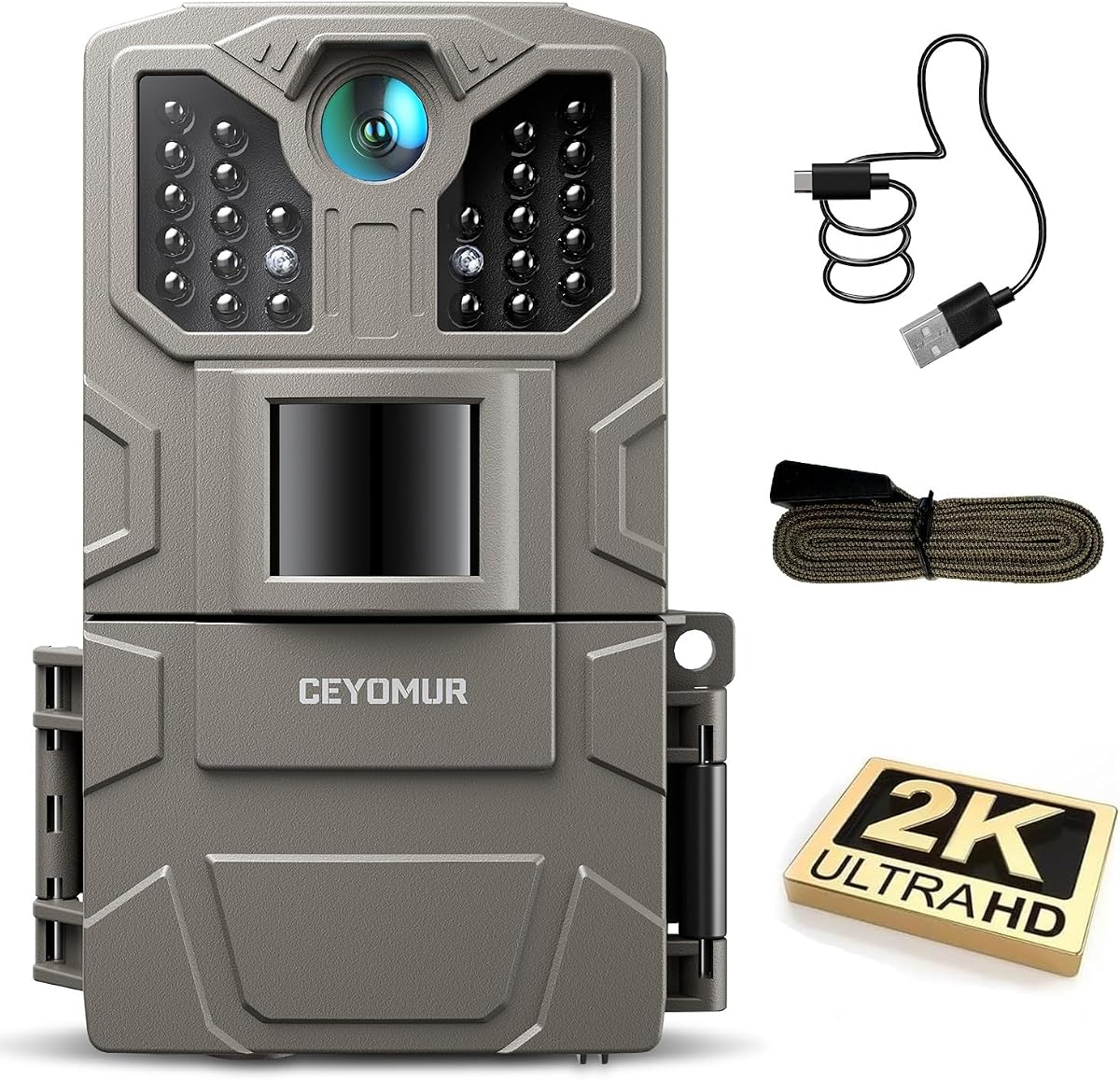
The CEYOMUR Trail Camera is designed for beginners seeking a straightforward and reliable device. With 36MP photos and 2K video, it captures clear footage of wildlife while keeping operation simple enough for first-time users to manage easily.
We may earn a commission when you buy through this link, at no additional cost to you.
Its integrated design places the lens, screen, and controls on one side making setup faster in the field. The camera uses 850nm infrared LEDs for night vision which provides bright images without visible light that could disturb animals or reveal camera positions.
The fast trigger speed ensures that moving targets are captured promptly, while the IP66 waterproof rating guarantees durability in rain and snow. These features make it a practical choice for monitoring property or tracking wildlife without complex setups.
This model is best for users who want a no-fuss trail camera at an entry-level price. If you need a dependable tool for capturing wildlife moments without needing remote connectivity, the CEYOMUR camera offers solid performance and ease of use.
All controls and the screen are on one side so you can adjust angles and settings quickly without flipping the camera open or fumbling with buttons.
Built to withstand rain dust and cold, the camera ensures reliable performance year-round regardless of the weather conditions in your area.
We may earn a commission when you buy through this link, at no additional cost to you.
The WOSPORTS Mini Trail Camera 2 Pack offers excellent value for users needing to monitor multiple locations. Each camera captures 30MP photos and 1080p video, providing clear images for wildlife tracking while keeping the price affordable for multiple units.
We may earn a commission when you buy through this link, at no additional cost to you.
This kit includes two 16GB SD cards which simplifies setup right out of the box. The compact camouflage design helps each unit blend into trees and fences ensuring minimal disturbance to animals in the monitored area.
Powered by only 4 AA batteries each camera is designed for low power consumption. This efficiency extends standby time allowing you to leave the cameras in the field for extended periods without frequent battery changes.
Ideal for covering different trails or property boundaries this kit provides broad coverage without expensive gear. If you need to monitor several spots simultaneously on a budget the WOSPORTS 2 Pack is a practical and efficient choice.
With two cameras and SD cards included you can start monitoring multiple locations immediately without purchasing additional accessories.
The cameras use a low power system to maximize battery life making them ideal for long-term deployments with minimal maintenance.
We may earn a commission when you buy through this link, at no additional cost to you.
The WOSODA Mini Trail Camera 4 Pack is a comprehensive solution for covering large properties. With four cameras and all necessary accessories like SD cards and batteries, it provides an all-in-one setup for extensive wildlife monitoring and security.
We may earn a commission when you buy through this link, at no additional cost to you.
Each unit captures 30MP photos and 1080p video, delivering clear imagery for tracking animal movement. The compact design helps each camera blend into the environment reducing the chance of detection by animals or intruders.
Powered by four AA batteries, these cameras are designed for low power consumption to maximize runtime. The fast trigger speed ensures quick response to motion capturing every significant moment across your monitored locations.
This kit is perfect for large farms or estates where multiple entry points need tracking. If you want a cost-effective way to monitor several areas at once the WOSODA 4 Pack offers great value and practical coverage.
With four cameras and batteries included you avoid extra costs and get started monitoring your property immediately.
Low power consumption extends battery life ensuring your cameras stay active longer between maintenance visits.
We may earn a commission when you buy through this link, at no additional cost to you.
The GardePro E5S 2 Pack offers high-quality image capture for multiple spots. Each camera delivers 64MP photos and 1296p HD video, ensuring detailed footage for monitoring wildlife and securing large properties effectively.
We may earn a commission when you buy through this link, at no additional cost to you.
With a fast 0.1s trigger speed and three PIR sensors, the units capture fast-moving animals with precision. The non-cellular design prioritizes battery efficiency allowing extended operation while still supporting solar panels for continuous power.
Built with an IP66 waterproof rating these cameras withstand harsh weather conditions. The large storage support allows for extensive recording options giving you flexibility in how you monitor your area over time.
Ideal for hunters needing dual coverage with high image quality, this kit balances performance and value. If you want detailed footage across two points without cellular fees, the E5S 2 Pack provides excellent reliability and image clarity.
Each camera captures ultra-sharp 64MP photos ensuring you can zoom in on details without losing quality for identification purposes.
Supporting solar panels ensures that your setup can run indefinitely in sunny locations reducing maintenance needs significantly.
We may earn a commission when you buy through this link, at no additional cost to you.
Selecting the right battery life trail camera requires understanding how power management impacts long-term outdoor monitoring.
The choice between standard alkaline batteries and rechargeable lithium packs significantly affects runtime. Rechargeable lithium batteries generally offer higher energy density and perform better in cold weather, while standard alkaline batteries are easier to replace in remote locations. Some cameras support external solar inputs which can eliminate the need for manual battery swaps entirely.
Look for cameras that support both battery types and include a solar option for maximum flexibility in your field setup.
Trigger speed determines how quickly the camera captures an image after detecting motion. A faster trigger speed ensures that animals are captured at the right moment, reducing blurry or missed shots. Most high-performance cameras now feature trigger speeds under 0.5 seconds which is sufficient for most wildlife scenarios.
Prioritize cameras with trigger speeds of 0.3 seconds or faster to ensure you never miss fast-moving targets in the field.
Resolution affects the level of detail in your photos and videos. Higher resolution allows for better identification of animals and clear cropping of images for reports. Most modern cameras offer 30MP to 64MP photos and 1080p to 4K video which is sufficient for most hunting and monitoring needs.
Choose a resolution that balances file size with image quality to optimize battery usage and storage space on your SD card.
Night vision capabilities are critical for 24-hour monitoring. Cameras with infrared LEDs allow you to capture images in complete darkness without disturbing wildlife. Low-glow LEDs are preferable as they are less visible to animals compared to red-glow LEDs which can spook them.
Look for cameras with a range of at least 65 feet and low-glow technology to ensure clear and undisturbed night footage.
Connectivity determines how you retrieve data from the camera. Cellular models allow remote alerts and image transfers but consume more power. Wi-Fi models allow local access but require close proximity. Non-cellular models are the most power-efficient but require physical SD card retrieval.
Select based on your need for remote monitoring versus battery longevity to avoid unnecessary power drain during field deployment.
Trail cameras are exposed to rain, dust, and extreme temperatures. An IP66 rating ensures the device can withstand these conditions without failure. A rugged housing protects internal components from accidental drops or impacts in the field.
Always check for an IP66 or higher rating to ensure your camera survives seasonal changes and harsh weather conditions.
SD card capacity determines how much footage you can store before retrieval. High-resolution videos consume significant space so larger capacity cards are essential for long-term monitoring. Some cameras support SD cards up to 512GB offering extended recording periods.
Choose a camera that supports large SD cards to reduce the frequency of visits and maintenance in the field.
Advanced cameras include power-saving modes like sleep timers and detection zones. These features prevent the camera from waking up unnecessarily for small movements, conserving battery life. Configurable settings allow you to balance sensitivity with power usage effectively.
Look for models with configurable sleep modes and detection zones to extend battery life significantly between charging or replacements.
Mount your camera on a sturdy tree or post about three to four feet off the ground. Aim it at a game trail or water source to maximize capture rates of wildlife activity in your area.
Insert fresh batteries or charge the lithium pack before deployment. Ensure the SD card is formatted in the camera to prevent data corruption during initial use.
Check your camera periodically to replace batteries and download footage. Clear debris from the lens and verify the angle to maintain consistent performance throughout the season.
To extend battery life, use high-quality lithium batteries that perform better in cold weather. Enable power-saving settings like longer sleep intervals and lower detection sensitivity. Pairing your camera with a solar panel can also provide continuous power without manual replacement.
No, only cellular models require a monthly plan to send images remotely. Non-cellular cameras store photos locally on an SD card which you retrieve manually. Choose based on whether you need instant remote access or prefer local storage to save costs.
Most trail cameras support rechargeable lithium batteries which are more efficient than standard alkaline ones. Check the user manual to ensure compatibility and proper charging requirements. Using them with a solar panel can further reduce maintenance needs.
A resolution of 30MP or higher is typically sufficient for identifying wildlife features and tracking patterns. Higher resolutions produce larger files which may consume battery and storage faster. Balance your needs for detail with your camera's power capacity.
Use a sturdy lockbox or cable lock to secure the camera to a tree. Place it high up or in a hidden location to avoid detection by passersby. Some models also offer password protection and GPS tracking features for added security.
WiFi requires close proximity to the camera but offers free access without data fees. Cellular allows you to receive alerts and images from anywhere but depends on network coverage and a subscription. Choose based on your location and budget constraints.
Battery life varies by usage and temperature but typically lasts three to six months with standard alkaline batteries. Lithium batteries often last longer in cold conditions. If using a solar panel you may rarely need to change batteries depending on sunlight availability.
First check if the batteries are properly inserted and charged. Ensure the SD card is formatted correctly and not full. If issues persist consult the user manual for troubleshooting or contact the manufacturer's customer support for assistance.
We explored ten top-tier trail cameras offering a range of features from budget-friendly options to premium cellular models. Each choice balances performance power efficiency and durability to suit different monitoring needs effectively.
Prioritize battery life and image quality based on your specific goals. If remote access is important consider cellular models while those preferring longevity should look at non-cellular units with solar options.
Remember that prices and availability change frequently so verify current details before buying. Choosing the right device ensures reliable wildlife monitoring and property security for seasons to come.