
Rokinon Cine DS DS85M-C 85mm
4.5Editor score
Full Frame Coverage
T1.5 to T22 Range
Unified Gear Positions
This guide compares the top ten Cine Lens options for filmmakers, covering optical performance, build quality, and versatility to help you choose the right
Selecting the right Cine Lens is crucial for achieving professional-grade visuals in your productions. These lenses offer precise manual control, consistent T-stops, and cinematic bokeh that standard photo lenses often lack. Whether you are shooting narrative films or documentaries, the right lens defines your visual story.
We evaluated ten leading Cine Lens models based on optical sharpness, build durability, mounting compatibility, and value. Our analysis considers real-world performance in varied lighting conditions and sensor formats. This list helps you navigate the complex market to find tools that match your specific creative and technical requirements effectively.
Each pick highlights unique strengths, from ultra-fast apertures to versatile mount systems. Note that prices and availability can shift quickly due to market demand. Always verify current stock and terms before purchasing to ensure you get the best deal for your specific filmmaking setup and workflow needs.
4.5Editor score
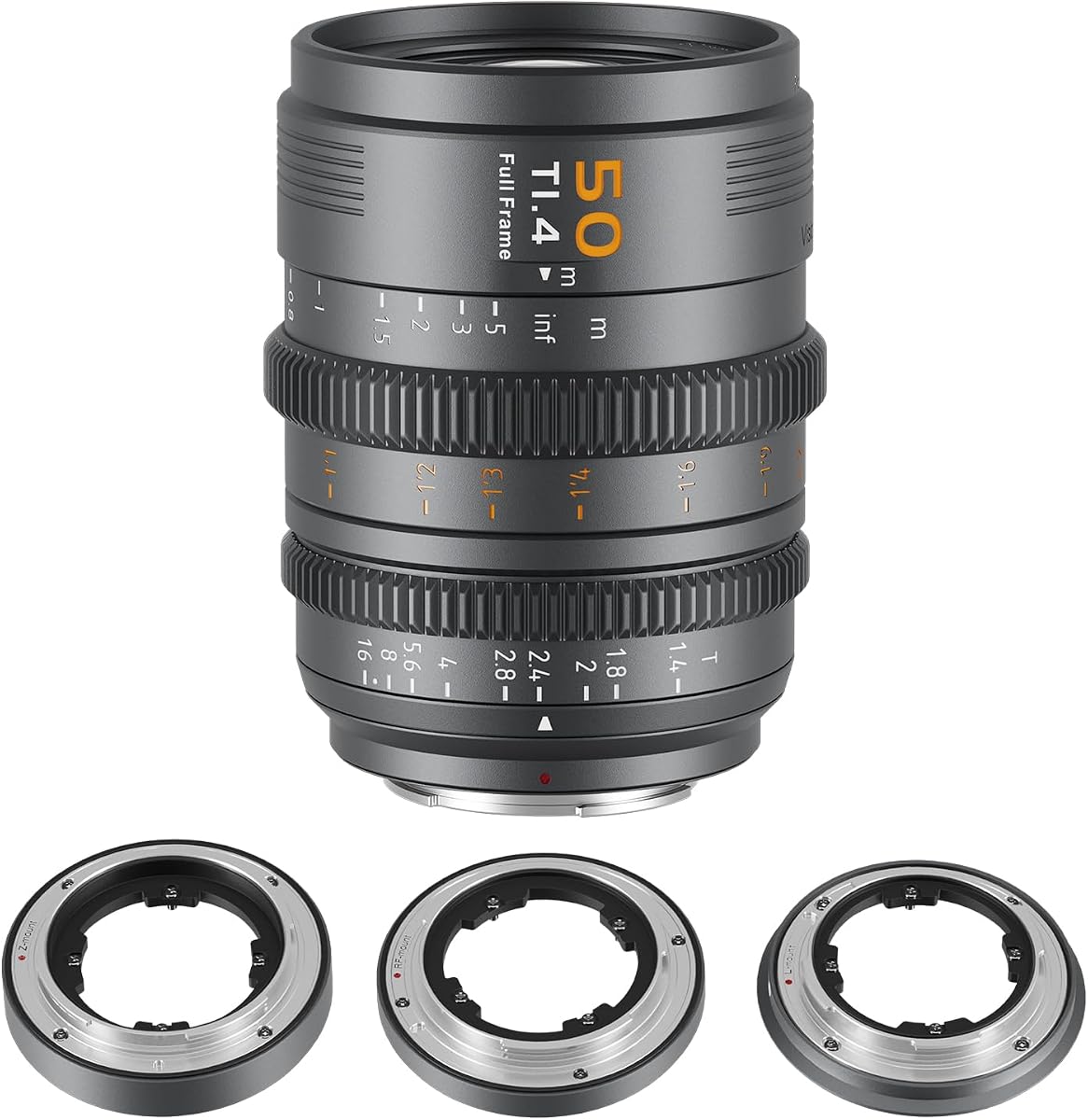
5.0Editor score

5.0Editor score
This side-by-side comparison highlights the key specifications and capabilities of each Cine Lens on our list, helping you quickly identify which model aligns with your camera system and filming style.


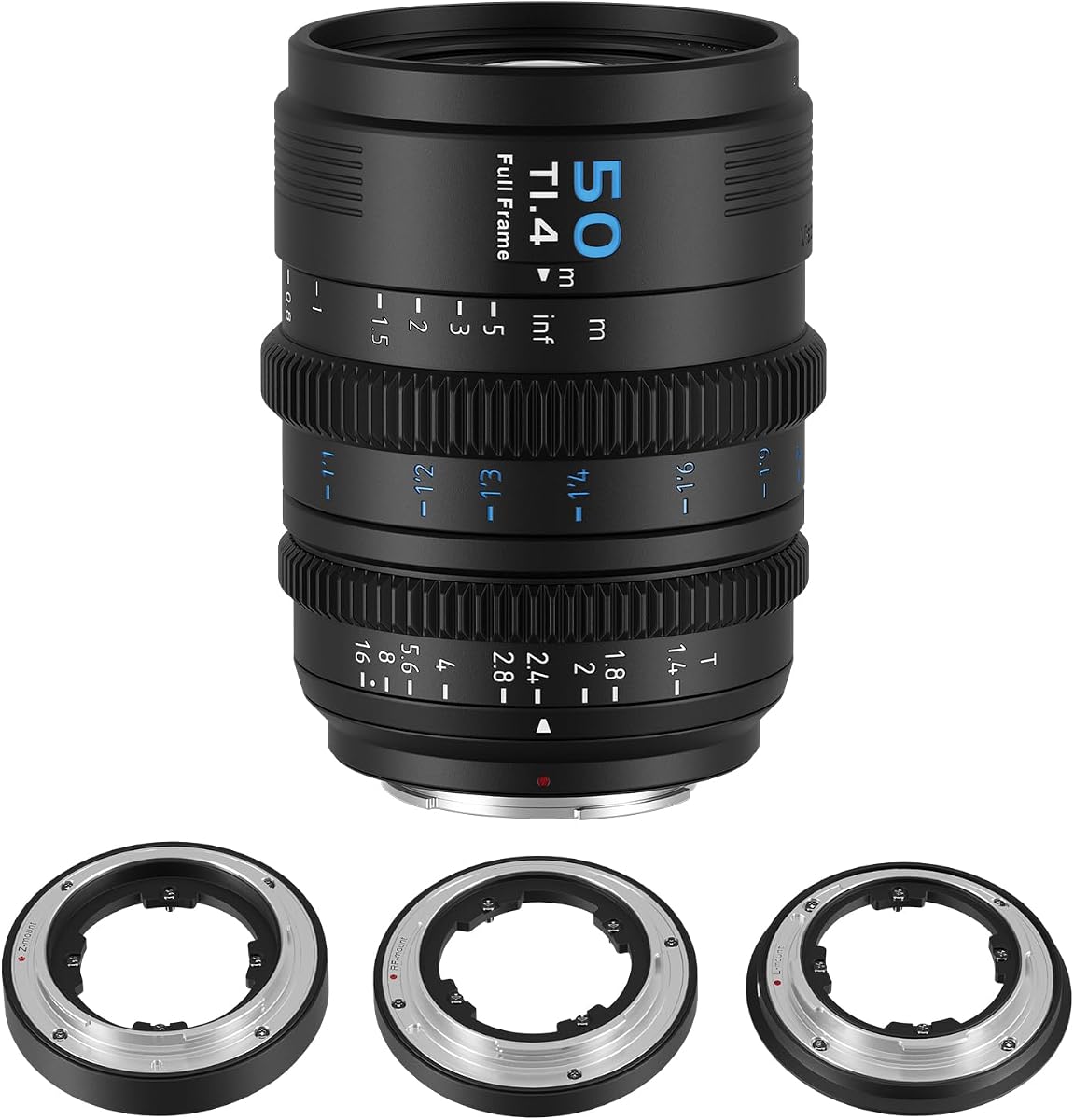


The SIRUI VP-1 Vision Prime 1 stands out as the top choice for filmmakers needing versatility and optical quality. Rated 5.0 by users, it delivers edge-to-edge sharpness crucial for high-resolution projects like 8K storytelling. Its unique interchangeable mount system allows seamless transitions between Sony, Canon, Nikon, and Panasonic cameras.
We may earn a commission when you buy through this link, at no additional cost to you.
This lens integrates aspherical elements and advanced glass to minimize chromatic aberrations. The T1.4 aperture ensures excellent low-light performance while maintaining nuance. The uniform design across the set ensures consistency when swapping lenses during shoots, making it ideal for professional crews.
While the price point is higher than some competitors, the build quality and optical performance justify the investment. It is compact enough for gimbal work yet robust enough for studio use. The focus ring and aperture are smooth, offering precise manual control.
This lens is best for creators who value flexibility across different camera bodies without compromising on image quality. If you need a reliable 50mm prime that adapts to your workflow, this is the top recommendation. Verify current stock before ordering.
The interchangeable mount system lets you switch between E, RF, Z, and L mounts easily, saving costs on multiple lenses.
Advanced ED and HRI glass ensure sharp images with minimal distortion, perfect for detailed storytelling.
We may earn a commission when you buy through this link, at no additional cost to you.
The Rokinon Cine DS DS85M-C is a standout for budget-conscious filmmakers who still demand quality. With a rating of 4.5, it offers full-frame coverage and a T1.5 aperture that creates attractive bokeh. This lens is part of the DS line, ensuring color matching with other Rokinon DS lenses.
We may earn a commission when you buy through this link, at no additional cost to you.
Its 85mm focal length is perfect for portraits and storytelling. The unified gear and aperture positions simplify rigging setups. At 3.6 ft minimum focus, it balances close-ups with flexibility. The 8-blade iris adds to the cinematic look of your footage.
While manual focus is required, the smooth ring helps. It lacks some advanced features found in premium options, but the value is undeniable. It's a solid entry point into cine lenses for those on a tight budget.
Buy this if you need a reliable 85mm portrait lens for Canon EF cameras without spending a fortune. It is widely available and well-regarded by hobbyists and semi-professionals. Check compatibility with your specific camera before purchase.
The 85mm focal length combined with T1.5 aperture provides excellent subject separation and background blur.
Unified gear positions mean you can use standard follow focus kits without extra adapters.
We may earn a commission when you buy through this link, at no additional cost to you.
The DZOFILM Pictor 50-125mm is a premium zoom lens designed for demanding environments. Rated 5.0, it maintains focus across the entire zoom range thanks to its parfocal design. This is essential for professional shoots where refocusing during a zoom would ruin a take.
We may earn a commission when you buy through this link, at no additional cost to you.
Its 16-slat iris ensures smooth aperture transitions, minimizing breathing. The T2.8 aperture is bright enough for many scenarios. It fits PL Mount and Canon EF, adding versatility. The build is solid, though heavy, fitting high-end productions.
The high price reflects its professional-grade capabilities. Focus breathing is negligible, allowing smooth zooms without distraction. It is heavier than primes, requiring sturdy support. The optical quality is consistent from 50mm to 125mm.
This lens is ideal for cinema professionals who need a versatile zoom without compromising sharpness or focus stability. If you shoot events or narrative features, this is a valuable addition. Ensure your rig can handle the weight.
Stays in focus while zooming, critical for high-pressure professional filming environments.
The 16-slat iris allows for smooth transitions and reduced breathing effects.
We may earn a commission when you buy through this link, at no additional cost to you.
The SIRUI Night Walker 35mm T1.2 is engineered for low-light performance. With a 4.4 rating, it delivers pure low-noise footage thanks to the massive T1.2 aperture. It covers S35 sensors, making it ideal for cameras like the Sony FX30 or ZVE-10.
We may earn a commission when you buy through this link, at no additional cost to you.
Optical performance is sharp even at max aperture. The aluminum housing is sturdy yet portable at 500g. The focus ring rotates 270 degrees for precision. This lens excels in capturing night scenes without excessive ISO.
Since it is designed for APS-C, it is not for full-frame cameras. The 0.4m minimum focus helps in close-up shots. It provides a cinematic look that rivals heavier, costlier lenses. The metal finish adds a premium feel.
Buy this if you need a fast prime for APS-C cameras in dark environments. It balances speed and weight perfectly for documentary work. Check your sensor size before buying to ensure compatibility with your camera body.
The T1.2 aperture lets you shoot in near-darkness while keeping noise low.
At 500g, it is easy to carry for handheld or gimbal documentary shooting.
We may earn a commission when you buy through this link, at no additional cost to you.
The SIRUI Night Walker 24mm T1.2 offers a wide perspective for dynamic storytelling. Rated 4.3, it brings landscapes and interiors to life with a broad field of view. The T1.2 aperture ensures low-light capability, maintaining smooth background separation.
We may earn a commission when you buy through this link, at no additional cost to you.
Focus as close as 0.3m for immersive compositions. The 270° rotation helps precise manual focus control. It is designed for RF mount systems like Canon EOS R7. The optical design minimizes aberrations and breathing.
While limited to APS-C sensors, it is a powerful tool for environmental storytelling. The build quality is robust, and the 0.3m close focus allows creative macro-style shots. It is a strong choice for shooters needing a wide prime.
Choose this if you shoot landscapes or city streets with Canon RF cameras. The fast aperture and wide angle make it versatile. Ensure your camera is compatible with the RF mount before purchasing.
The 24mm focal length provides a versatile view for landscapes and environmental shots.
Focus as close as 0.3m to capture details with depth and visual impact.
We may earn a commission when you buy through this link, at no additional cost to you.
The Rokinon 35mm T1.5 Cine DS is a reliable standard lens for Canon EF shooters. Rated 4.6, it offers full-frame coverage with consistent T-stops. Part of the DS line, it matches color and gear positions with other lenses in the series.
We may earn a commission when you buy through this link, at no additional cost to you.
The 35mm focal length is versatile for both video and photography. With a minimum focus of 12 inches, it handles close-ups well. The 77mm filter size is standard. The aperture range goes up to T22, offering depth of field control.
It is an affordable option for those entering cine lens systems. The manual focus ring is smooth, aiding in precise control. While not the newest tech, it delivers solid performance. The color matching is key for multi-lens shoots.
Buy this if you need a versatile 35mm for Canon EF cameras. It fits well into existing Rokinon DS sets. Ensure your camera is full-frame to maximize the coverage and field of view.
Matched color and gear positions make switching lenses during a shoot seamless.
A short minimum focus distance allows for intimate close-up shots.
We may earn a commission when you buy through this link, at no additional cost to you.
This VP-1 model is a repeat top contender with a 4.0 rating. It shares the same design as the earlier model, offering E/RF/Z/L mounts. The 50mm T1.4 aperture is perfect for low light and subject separation.
We may earn a commission when you buy through this link, at no additional cost to you.
The interchangeable mount system is a major advantage. You can swap mounts easily, adapting to different cameras. The optics are designed for 8K storytelling, using advanced glass. It is compact enough for travel.
While the rating is slightly lower due to user experiences, the performance is strong. The aluminum body is durable. The T1.4 aperture allows for beautiful bokeh. It is consistent with the rest of the set.
Select this if you need a single lens that fits multiple systems. The 50mm focal length is a staple for storytelling. Ensure you have the correct mount adapter or purchase the kit.
Use one lens body with multiple mounts to save on equipment costs.
Engineered with glass that supports high-resolution 8K filmmaking.
We may earn a commission when you buy through this link, at no additional cost to you.
The SIRUI Night Walker 24mm M4/3 version is a favorite for Micro Four Thirds shooters. Rated 4.9, it is perfect for cameras like BMPCC4K. The T1.2 aperture ensures low-light performance with pleasing bokeh.
We may earn a commission when you buy through this link, at no additional cost to you.
The optical performance is sharp even at max aperture. The focus ring rotates 270 degrees for precision. It weighs around 500g, making it portable. The 0.3m close focus allows for detailed shots.
It is designed for S35 coverage, fitting M4/3 perfectly. The build is premium, with aluminum housing. This lens helps capture clean night scenes. It is consistent with the brand's Night Walker series.
Buy this if you use Panasonic or Blackmagic cameras. It offers a wide angle and fast aperture in a compact body. Check your camera model to ensure it matches the M4/3 mount.
Designed specifically for M4/3 cameras like GH5 and BMPCC4K.
T1.2 aperture helps shoot in dark conditions without raising ISO.
We may earn a commission when you buy through this link, at no additional cost to you.
The Rokinon DSX85 DSX is a high-rated lens for portraits. With a 4.7 rating, it offers T1.5 aperture and 9 blades for soft bokeh. It covers full frame and works with Canon EF cameras.
We may earn a commission when you buy through this link, at no additional cost to you.
Optical construction includes 9 elements in 7 groups. The T1.5 to T34 range is versatile. The multi-coated glass reduces flare. It is color matched with other DSX lenses.
The focus is manual, but the smooth ring helps. The 72mm filter size is standard. The 28.4 degree view angle is classic for portraits. It is a reliable option for budget filmmakers.
Choose this for portrait work with Canon EF. The optical quality is high for the price. Verify compatibility with your specific camera model before purchasing.
9 aperture blades create a soft and attractive background blur.
Color matching ensures consistency if you own other DSX lenses.
We may earn a commission when you buy through this link, at no additional cost to you.
The SIRUI Night Walker 35mm is a top lightweight choice for E-mount shooters. Rated 4.4, it is perfect for cameras like A7R V or FX3. The T1.2 aperture delivers clean low-light footage.
We may earn a commission when you buy through this link, at no additional cost to you.
The aluminum housing is sturdy yet light at 500g. It helps protect internal elements. The 0.4m focus distance allows for close-ups. The focus ring rotation is 270 degrees.
It is suitable for S35 coverage, balancing size and performance. The optical performance is sharp at max aperture. The 35mm focal length is versatile for documentary work. The metal finish adds premium aesthetics.
Buy this if you need a light 35mm prime for E-mount. It is great for handheld or gimbal shooting. Check your camera sensor size to ensure it is compatible with APS-C.
Lightweight design makes it easy to carry on location shoots.
Designed specifically for Sony E-mount systems like FX3 and A7 series.
We may earn a commission when you buy through this link, at no additional cost to you.
Choosing the right Cine Lens depends on your camera system, budget, and production needs. This guide breaks down the key factors to consider.
Ensure the lens mount matches your camera. Options include Canon EF, RF, E, PL, or M4/3. Some lenses offer interchangeable mounts for flexibility.
Always check the mount type before buying to avoid extra adapters.
Match the lens to your sensor size. Full-frame lenses cover larger sensors, while APS-C lenses may vignette on full-frame.
Choose full-frame coverage if you plan to upgrade your camera later.
Faster apertures like T1.2 or T1.5 are ideal for low light. They also provide shallow depth of field for cinematic looks.
Prioritize faster aperture if you shoot in varied lighting conditions.
Cine lenses feature manual focus with smooth rings. Look for long throw for precision. Automatic focus is rare in professional cine lenses.
Practice manual focus techniques to get the best results.
Metal housings are durable and resistant to weather. Plastic bodies are lighter but may wear faster. Check for consistent gear positions.
Invest in a lens with a solid build for professional reliability.
Advanced elements like aspherical or ED glass reduce aberrations. They improve sharpness and color fidelity across the image.
Look for lenses with high-quality glass for clearer footage.
Cine lenses range from affordable to premium. Balance cost with optical performance. Some kits offer better value than single lenses.
Set a realistic budget that aligns with your production goals.
Always attach the lens securely to the camera body. Check for any dust on the mount and clean gently with a blower. Ensure the camera and lens firmware are updated.
Use a protective cap when not in use. Store the lens in a dry, cool place to prevent moisture damage. Avoid leaving it in direct sunlight to protect optical coatings.
Clean the glass with a microfiber cloth and proper cleaning solution. Handle the focus and aperture rings with care to prevent mechanical wear. Regular maintenance extends the lens life.
A Cine Lens is designed for video production, offering manual control over focus and aperture. It typically has T-stops instead of F-stops and minimal focus breathing.
Yes, if the mount matches. You may need adapters for some cameras. Ensure the lens covers your sensor size to avoid vignetting.
T-stop measures light transmission accurately for exposure. F-stop measures the physical size of the aperture. Cine lenses use T-stops for consistency.
Most Cine Lenses are manual focus. This gives filmmakers precise control. Some newer models offer motorized focus but manual remains the standard.
Use a camera rig with follow focus and rails. Ensure the gear positions align. This allows smooth manual focus during shooting.
They range from budget-friendly to premium. Entry-level options exist for hobbyists. Higher-end models cost more due to build and optics.
Popular brands include Rokinon, SIRUI, and DZOFILM. The best choice depends on your budget and camera system.
We have reviewed the top Cine Lens options for November 2026. From versatile SIRUI models to affordable Rokinon picks, there is something for every filmmaker.
Prioritize mount compatibility and optical quality when deciding. Your choice should support your shooting style and future upgrades.
Remember to verify current stock and availability before purchasing. Prices change frequently, so checking the latest listings ensures you get the best deal.