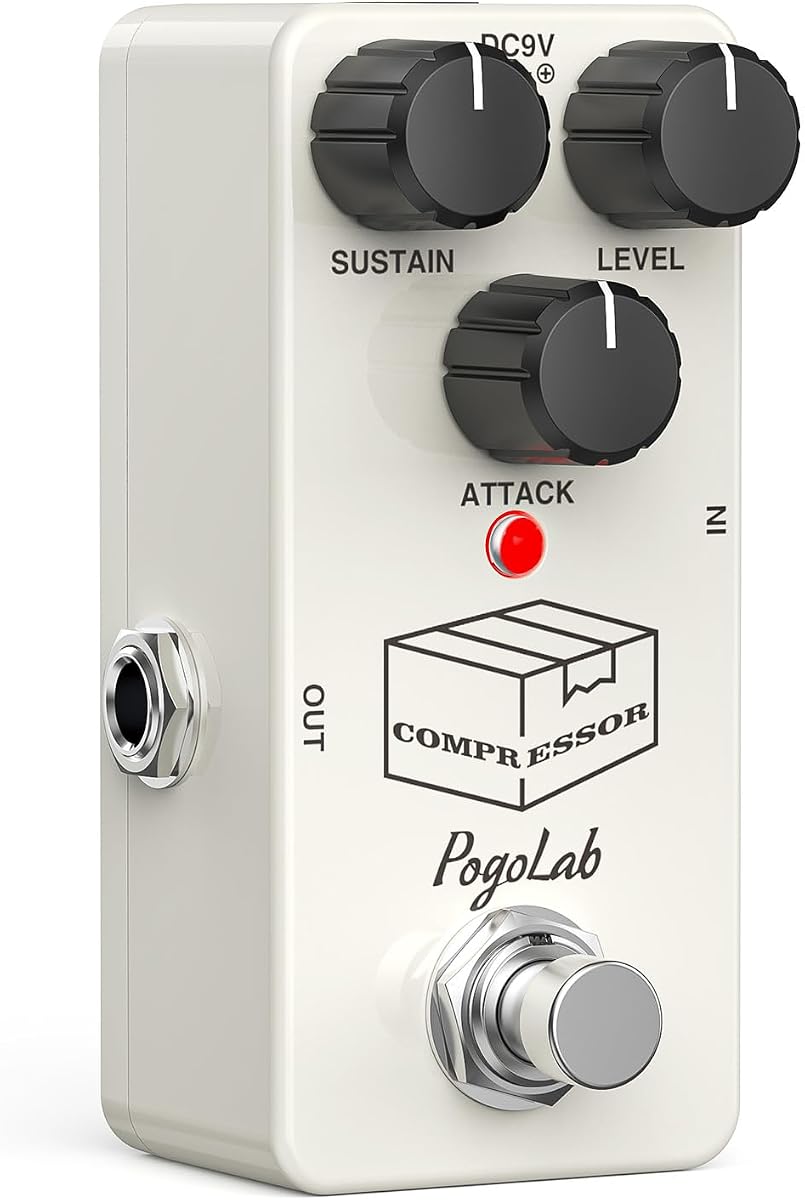
Pogolab Compressor Pedal
4.2Editor score
Aluminum Alloy Construction
Independent Sustain Control
True Bypass Signal Path
Compare the top bass compressor pedals for 2026. We review ten expert models to help you choose the perfect compression sound for your instrument.
Bass compressor pedals are essential tools for musicians seeking consistent tone and dynamic control. They smooth out performance variations and ensure every note cuts through the mix with clarity and punch.
We analyzed ten highly rated models from leading brands like MXR, Boss, and Keeley. Our review focuses on sound quality, build durability, and specific features that define a great compressor for bassists.
Each pick highlights unique strengths and ideal use cases for different playing styles. Please note that availability and pricing may vary by retailer and region at any given time.
4.2Editor score

4.6Editor score

4.7Editor score
This side-by-side comparison highlights the core specifications and distinctive features of every model included in our comprehensive review of today's top bass compressor pedals.


The MXR Bass Compressor stands out as a premier choice for players seeking transparency. With a rating of 4.6, it delivers clean performance using Constant Headroom Technology to maintain dynamic integrity.
We may earn a commission when you buy through this link, at no additional cost to you.
Its defining feature is the ability to let your full dynamic range shine until the compression threshold is reached. The ten highly visible gain-reduction status LEDs provide immediate visual feedback on how much compression is occurring at any moment.
The trade-off involves a higher price tag and fewer adjustable parameters compared to multi-knob units. However, this simplicity ensures consistency and reduces the likelihood of dialing in unwanted coloration.
This pedal is ideal for session players and gigging musicians who need reliable tone shaping without altering their core sound. It remains a top recommendation for those valuing purity above all else.
This technology ensures that your bass tone remains clear even when pushing the compressor hard for more sustain.
The LED array allows you to instantly see how much compression is active, aiding in quick adjustments on stage.
We may earn a commission when you buy through this link, at no additional cost to you.
The BOSS BC-1X is a high-performance pedal that uses intelligent circuitry to adapt to different bass registers. It scores a 4.5 rating for its ability to preserve the natural fundamental tone of your instrument.
We may earn a commission when you buy through this link, at no additional cost to you.
Its unique selling point is the interactive internal processing that allows for sophisticated multiband compression settings using simple controls. The 18-Volt input electronics provide ample headroom to ensure a clean and punchy sound without distortion.
While the internal complexity is powerful, it can be daunting for players who prefer total manual control over every frequency band. This design prioritizes ease of use and tonal fidelity over granular tweaking.
It is best suited for players looking for a set-and-forget solution that adapts to their playing style automatically. This makes it an excellent choice for live performance where consistency is paramount.
The circuitry automatically adjusts to your playing nuance, ensuring every note is compressed appropriately without manual intervention.
Operating at 18 Volts provides significant headroom, preventing the clipping that often occurs with lower voltage pedals on active basses.
We may earn a commission when you buy through this link, at no additional cost to you.
The Boss CS-3 is a staple in many pedalboards due to its reliable and straightforward design. Rated at 4.6, it offers precise tonal shaping through onboard level, tone, attack, and sustain controls.
We may earn a commission when you buy through this link, at no additional cost to you.
Its strength lies in its dynamic signal control which compresses loud signals while boosting softer ones for a smooth overall sound. The low-noise design ensures super-quiet operation during both performance and recording sessions.
The main limitation is the lack of true bypass, which can slightly color the tone when the pedal is off. However, this is often negligible in a chain of many other effects pedals.
This pedal is perfect for beginners or veterans who need a dependable unit for consistent dynamics. Its compact size and robust warranty make it a practical choice for touring musicians.
Multiple control knobs allow you to tailor the compression characteristics to match your specific bass and amplifier setup.
The included five-year warranty provides peace of mind regarding the long-term durability and reliability of the unit.
We may earn a commission when you buy through this link, at no additional cost to you.
The MXR M87 Bundle offers a complete solution for those starting with compression. It features the same recording-quality compression and Constant Headroom Technology as the standalone unit.
We may earn a commission when you buy through this link, at no additional cost to you.
This set includes everything needed to get running immediately, such as a 9V power supply, patch cables, and an instrument cable. The true bypass switching keeps your low end tight and clean when the pedal is disengaged.
The cost may be higher due to the bundled items, but it saves the hassle of sourcing compatible accessories separately. Some users might not need all the included items if they already own them.
It is an excellent choice for new players or those upgrading their first pedalboard. The bundle ensures you have all the necessary tools to optimize your bass tone right out of the box.
Including essential cables and power in the box reduces setup time and ensures compatibility with the pedal from day one.
The compression is designed to hold up well under studio scrutiny, making it versatile for both live and home recording.
We may earn a commission when you buy through this link, at no additional cost to you.
The Keeley Bassist is built around the high-fidelity THAT Corp. 4320 chip, offering true high-fidelity compression and limiting. It has a 4.6 rating for its ability to handle astonishingly large signals without distortion.
We may earn a commission when you buy through this link, at no additional cost to you.
Its internal architecture includes voltage controlled amplifiers and an ultra high performance op-amp system. This results in an incredible bandwidth of over 20 KHz and incredibly low noise levels.
Because of the specialized components, the build cost is higher than average. Some users may find the limited control scheme restrictive if they need fine-tuned compression ratios.
It is the ideal pick for audiophiles and recording artists who demand pristine signal quality. No detail in your bass guitar’s tone will be lost with this unit in your chain.
This exotic chip is a staple in high-end studio gear, brought into a stompbox format for portable excellence.
Over 20 KHz of bandwidth ensures that the full harmonic spectrum of your instrument is preserved accurately.
We may earn a commission when you buy through this link, at no additional cost to you.
The Pogolab Compressor Pedal is an affordable option designed to reduce common noise swells. It receives a 4.2 rating for providing a quiet effect possible with its specific circuit coding.
We may earn a commission when you buy through this link, at no additional cost to you.
It features separate controls for Sustain and Attack, allowing you to adapt to bass and high-output active pickups. The construction is durable aluminum alloy with a sturdy LED indicator to show the working state.
The main downside is the absence of a power adapter, requiring you to supply your own 9V DC supply. The basic controls are also less detailed than on higher-end models.
This pedal is a great value for beginners or those needing a simple compressor on a budget. It offers essential features without the premium cost of branded alternatives.
Proprietary code minimizes the swells often found in compressor circuits, resulting in a cleaner signal path.
The mini design fits easily into tight pedalboard spaces while maintaining full functionality for your tone.
We may earn a commission when you buy through this link, at no additional cost to you.
The Electro-Harmonix Bass Preacher features input sensitivity ranging from -10 dBu to +2 dBu, making it a perfect fit for varying output levels. It has a 4.2 rating for its ability to provide significant sustain and make-up gain.
We may earn a commission when you buy through this link, at no additional cost to you.
Its attack toggle switch offers three selectable settings: Fast, Medium, and Slow. This allows for precise control over the onset of compression and the feel of the pedal under your fingers.
The casing is primarily plastic, which might concern some users looking for metal durability. However, it is lightweight and effective for both passive and active basses.
This pedal is suitable for players who need versatile attack speeds and maximum sustain. It is a strong candidate for those who value flexibility in dynamic shaping.
The wide sensitivity range ensures it works equally well with passive basses and high-output active instruments.
Three attack settings allow you to match the compression to your playing style, from fast funk to slow sustain.
We may earn a commission when you buy through this link, at no additional cost to you.
The Universal Audio LA2A Studio Compressor Pedal is an authentic emulation of the iconic Teletronix LA-2A optical tube compressor. It holds a 4.7 rating for capturing vintage transformers and tube amplifiers perfectly.
We may earn a commission when you buy through this link, at no additional cost to you.
Its standout feature is the mix control for easy parallel compression effects. This allows you to blend the compressed signal with the dry signal to maintain natural dynamics while adding warmth.
The high price is a barrier for many, and the fixed ratios limit some specific studio needs. However, the craftsmanship ensures reliable performance over years of use.
It is ideal for professionals seeking studio-grade warmth in a compact format. If you want the sound of a classic studio compressor on your pedalboard, this is the definitive choice.
The T4 optical cell capture provides smooth, natural compression that mimics the famous studio hardware.
Parallel compression control helps you keep the natural attack of your instrument while adding sustain.
We may earn a commission when you buy through this link, at no additional cost to you.
The MXR Dyna Comp Bass Compressor is a re-tuning of the classic Dyna Comp sound specifically for bass players. It has a 4.0 rating for retaining the low end and transparency that bassists require.
We may earn a commission when you buy through this link, at no additional cost to you.
Output and sensitivity controls allow you to set volume level and the length of sustain. This simplicity makes it easy to dial in a consistent sound for live performance.
It is less transparent than modern options and may alter the tone more than desired. It also lacks advanced features like true bypass or LED indicators.
This pedal is best for players seeking that specific vintage studio sound. If you want a traditional compressor character that cuts through a mix, this is a solid tool.
Re-tuned specifically for bass, ensuring low frequencies remain present and do not disappear under compression.
This model inherits the legacy of the original studio standard, now adapted for modern bass frequencies.
We may earn a commission when you buy through this link, at no additional cost to you.
The MXR Dyna Comp Compressor is an in-line compressor that evens out the signal to your amplifier. It has a high 4.8 rating for its stability and consistent constant output signal.
We may earn a commission when you buy through this link, at no additional cost to you.
This unit is known as the Nashville studio standard for its ability to provide stable dynamics and increased sustain. The simplicity of the design ensures it remains a go-to for many professional guitarists.
It lacks modern features like true bypass, which might color the tone slightly when bypassed. The older design also lacks the visual feedback found in newer compressors.
It is an excellent choice for guitarists needing a reliable compression signal without extra complexity. Its reputation as a studio standard speaks to its enduring quality and consistency.
The compressor provides a constant output signal that ensures your dynamics remain stable across a set.
Known as the Nashville standard, this pedal has proven itself in countless professional recordings over decades.
We may earn a commission when you buy through this link, at no additional cost to you.
Choosing the right compressor requires balancing sound characteristics with the specific needs of your playing style and performance environment.
The threshold determines the volume level at which compression begins. A lower threshold means more notes will be compressed, while a higher threshold only affects loud peaks.
Look for a threshold that allows you to control the dynamics of your loudest notes without squashing your softer playing.
Attack time controls how quickly the pedal reacts to a note. Fast attack times can round off sharp transient peaks, while slower attacks let more initial punch through.
Choose an attack time that matches your style; faster is usually better for funk, while slower suits melodic playing.
Release time dictates how fast the pedal stops compressing after the note falls below the threshold. Slow releases can create a smoother sound but might pump or breathe.
Opt for a release time that feels natural and does not distract from the rhythm or groove of your playing.
The ratio determines the amount of compression applied. High ratios squash the signal heavily, while low ratios offer a subtler touch on your dynamics.
Adjust the ratio to find a balance between dynamic control and preserving your instrument's natural expressiveness.
True bypass ensures your signal remains uncolored when the pedal is off. Buffered bypass can help maintain signal integrity over long cable runs.
Select true bypass if you want a completely clean signal path when the pedal is disengaged.
Touring requires robust gear that can withstand physical stress. Metal enclosures and solid footswitches are essential for longevity and reliability.
Ensure the pedal is made of durable materials like aluminum alloy if you plan to use it in live settings.
Check whether the pedal runs on a standard 9V supply or requires specialized power. Some advanced units might need 18V for extra headroom.
Verify the power needs match your existing supply or plan accordingly to avoid interruptions during performance.
Pricing varies widely based on features and brand reputation. Set a realistic budget that covers the essential features you need without overspending.
Consider that sometimes a more expensive unit offers better long-term value due to higher build quality.
To start using your compressor, place it early in your signal chain, ideally before distortion or drive pedals. Set the attack and release controls to match your playing dynamics.
Adjust the ratio to find the right amount of compression for your mix. Too high can sound unnatural, so aim for a balanced feel that supports your playing style.
Regularly inspect your pedal for loose screws or worn cables. Keep it clean from dust and dirt to ensure reliable operation over time.
Place it early in the chain, typically after your tuner and before drive or distortion pedals. This ensures your input signal is stable before any coloration occurs.
Yes, many bass compressors work well on electric guitar, though they may be tuned for lower frequencies. Some models are universal for both instruments.
Optical compressors use light cells for smooth, musical compression, while VCA uses voltage-controlled amplifiers for precise, technical control. Both have distinct tonal characteristics.
Use a compressor with effective noise reduction features or add a noise gate after it. Ensure your cables are high quality to minimize hiss from your signal path.
Most pedals require a 9V DC power supply or battery. Check your specific unit requirements to ensure you have the correct adapter for reliable operation.
Yes, compressor pedals are widely used in studios to add sustain and consistency. High-quality units can replicate rack-mounted gear effectively for recording.
Choosing the right compressor depends on your desired sound and budget. The MXR and Boss units offer a mix of transparency and reliability for most players.
Prioritize features that directly improve your playing experience. If simplicity is key, a straightforward unit is better than a complex multi-knob option.
Remember to check current availability and retailer details before purchasing. Prices and stock can change frequently, so act when you find the right fit.