
QWORK RC Battery Capacity Checker
4.7Editor score
Affordable and compact
Clear voltage display
Supports 2-7S packs
This guide compares the best Li Ion Battery Tester options for 2026, covering capacity, voltage, and internal resistance testing for various battery types.
Finding the right Li Ion Battery Tester is crucial for maintaining battery health and ensuring safety. Whether you work with drones, flashlights, or household devices, accurate testing prevents failures. This guide highlights top models that deliver precise readings for capacity and voltage.
We evaluated ten leading testers based on compatibility, accuracy, and ease of use. Each product was selected for its ability to handle specific battery chemistries like Li Ion, LiPo, and NiMH. Our analysis focuses on features that matter most to enthusiasts and professionals alike.
Each pick in this list showcases unique strengths for different user needs. From budget-friendly modules to advanced balancers, you will find a suitable tool here. Please note that product prices and availability may change over time, so verify details before purchasing.
4.7Editor score

4.7Editor score

4.0Editor score
The following table provides a side-by-side comparison of all ten selected Li Ion Battery Tester models. It highlights key specifications such as supported battery types, display features, and unique capabilities to help you choose the right tool for your needs.




The ISDT BG-8S Battery Meter stands out as a top choice for serious RC enthusiasts and professionals. It offers comprehensive data including cell voltage, cycles, and working parameters. Its high rating reflects its reliability and advanced feature set.
We may earn a commission when you buy through this link, at no additional cost to you.
This device integrates BattGO technology to provide deep insights into battery health. The auto balancing function ensures individual cells remain balanced, extending battery lifespan. It also supports multiple connection types like XT60 and XH balance leads.
While highly capable, the BG-8S may require time to master all features. It relies on specific connectors for full functionality. However, these limitations are minor compared to the value it provides for battery maintenance.
Buy this tester if you need precise data and balancing for Li Ion or LiPo packs. It is ideal for drones and RC vehicles. The combination of testing and power bank features makes it a versatile tool.
The BG-8S provides detailed parameters such as battery cycles and working status. This helps you track performance over time and replace batteries before they fail unexpectedly.
Support for XT60, XH, and JST connectors allows you to test a wide range of battery packs without extra adapters. This flexibility saves time and simplifies your workflow.
We may earn a commission when you buy through this link, at no additional cost to you.
The QWORK RC Battery Capacity Checker is an excellent entry-level tool for hobbyists on a budget. It delivers clear voltage readings and supports multiple battery types. Its high user rating indicates strong satisfaction with performance.
We may earn a commission when you buy through this link, at no additional cost to you.
This checker displays total voltage, per-cell voltage, and voltage differences instantly. It helps you quickly assess the health of LiPo and LiIon packs. The compact design makes it easy to carry to the field.
It is limited to balance connectors and does not charge batteries. These constraints are acceptable given its low price point. It focuses on quick and reliable voltage checks.
Choose this if you need a simple way to check RC batteries before flights. It is perfect for beginners or as a secondary tester. You save money without sacrificing essential functionality.
The digital screen provides immediate feedback on cell conditions. You can spot weak cells quickly and ensure safety before using your device.
Weighing very little, this device fits easily into any flight bag. It is designed for quick checks between sessions without setup hassles.
We may earn a commission when you buy through this link, at no additional cost to you.
The Advanced 8 Channel Battery Tester is designed for users who need extensive capacity and health analysis. It supports testing multiple 18650 cells simultaneously. Its robust features justify the premium price for serious collectors.
We may earn a commission when you buy through this link, at no additional cost to you.
With eight independent channels, you can run simultaneous tests without interference. The real time voltage and current display helps track discharge curves accurately. Active heat dissipation ensures safe operation during long cycles.
This device requires some technical expertise to set up and use effectively. It is less intuitive than simple voltage checkers. However, the depth of data provided is unmatched in its class.
Buy this if you manage large numbers of lithium batteries and need precise capacity data. It is ideal for workshops or serious hobbyists. The reliability and precision make it a worthy investment.
Eight channels allow you to test multiple batteries at once. This saves significant time compared to testing cells one by one.
Active heat dissipation keeps the device cool during heavy use. This prevents overheating and ensures consistent readings over long periods.
We may earn a commission when you buy through this link, at no additional cost to you.
This 18650 Battery Tester Module is a cost-effective solution for checking capacity and resistance. It features four channels and a digital LCD display. Users appreciate its functionality at an accessible price point.
We may earn a commission when you buy through this link, at no additional cost to you.
It measures capacity, internal resistance, and real-time voltage simultaneously. The Type-C port offers convenient power access. It is suitable for home workshops where budget is a concern.
The interface is basic and may require some setup steps. Documentation might be less comprehensive than branded units. These factors are acceptable for the value offered.
Choose this module if you need to test multiple cells without spending much. It is good for verifying capacity before use. The balance of features and price is compelling.
Testing both capacity and resistance gives a full health picture. This ensures batteries perform well and safely in high drain devices.
The LCD screen displays key metrics clearly. You can track discharge progress easily without extra tools.
We may earn a commission when you buy through this link, at no additional cost to you.
The Magnetic Battery Tester is designed for simplicity and ease of use with common household batteries. It includes sizes like AA, AAA, and 9V. Users find it handy for quickly checking battery status at home.
We may earn a commission when you buy through this link, at no additional cost to you.
Its magnetic slot secures the battery firmly for testing. The display shows health status like good or poor. It is powered by a rechargeable battery, avoiding frequent replacements.
It lacks the advanced metrics found in RC testers. It is not suitable for multi-cell packs. This simplicity makes it user-friendly for general tasks.
Use this tester for managing remote control and flashlight batteries. It prevents waste by identifying weak batteries early. The magnetic feature makes testing effortless.
The magnetic slider holds the battery in place. This allows for reliable testing without slipping or manual holding.
A USB-C rechargeable battery powers the unit. This reduces battery waste and ensures you always have a working tester.
We may earn a commission when you buy through this link, at no additional cost to you.
The RC Cellmeter 8 is a versatile tool for checking various battery chemistries. It supports LiPo, Li-ion, and NiMH packs easily. The large screen and simple design make it accessible for new users.
We may earn a commission when you buy through this link, at no additional cost to you.
It measures voltage and capacity with a one-click button. The minimum operating voltage prevents damage to batteries. It is a reliable choice for regular health checks.
While practical, it lacks advanced analysis features like balancing. It relies on balance plugs for multi-cell packs. These limits keep costs low and operation simple.
Select this meter if you need a straightforward way to check multiple battery types. It works well for casual RC hobbyists. The ease of use is a major benefit.
Testing starts with a single button press. This quick process lets you verify batteries without delays.
The device cuts off at 1.2 volts to protect batteries. This feature prevents deep discharge during checks.
We may earn a commission when you buy through this link, at no additional cost to you.
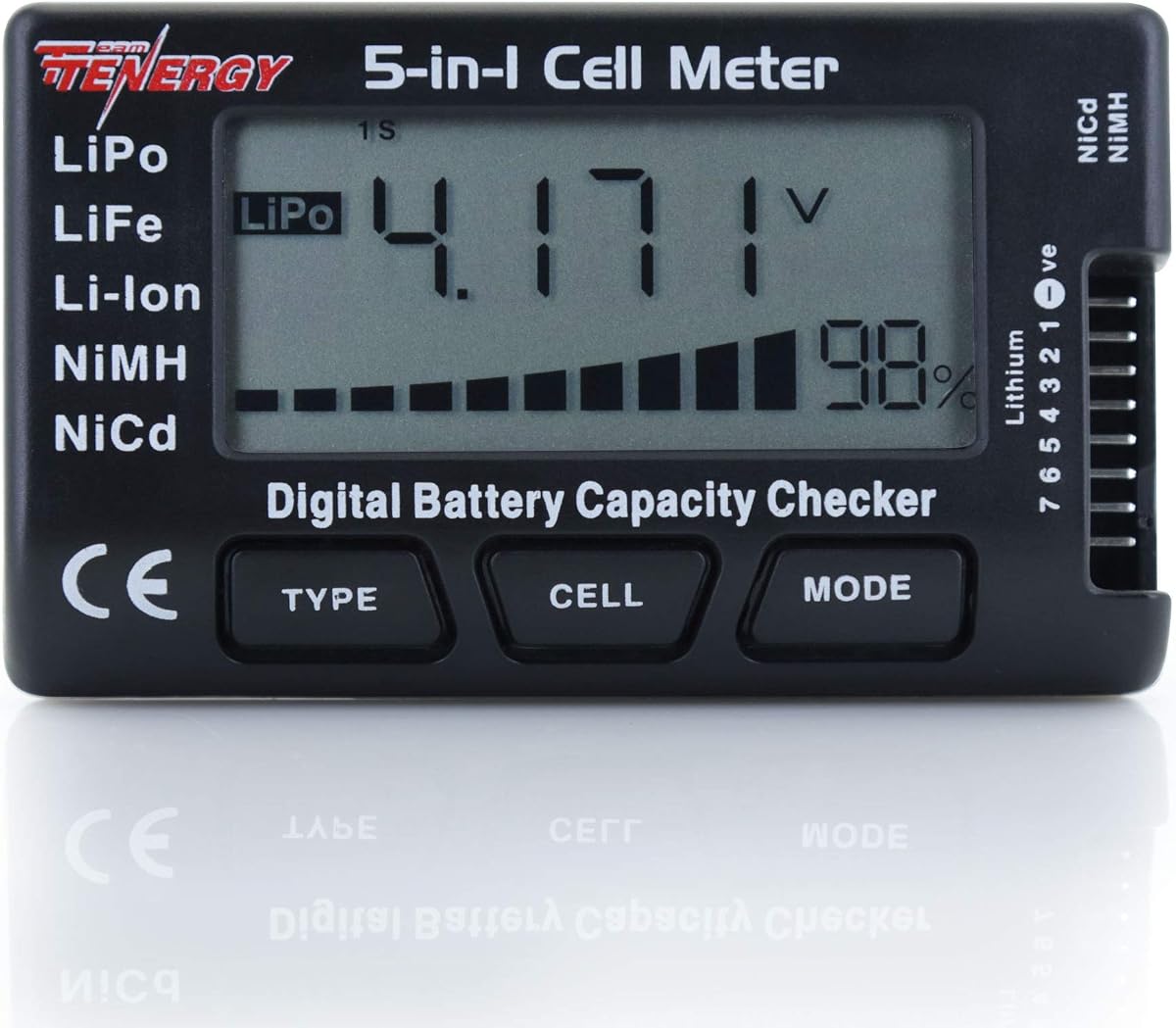
The Tenergy 5-in-1 Battery Meter combines testing with balancing capabilities. It helps optimize performance for LiPo and NiMH packs. Users value its ability to extend battery lifespan through balancing.
We may earn a commission when you buy through this link, at no additional cost to you.
It includes a discharge function that can balance batteries before charging. The internal resistance feature allows health assessment. It connects directly to balance ports for power.
It requires specific connectors like Futaba or Hitech. This limits use with non-standard packs. Still, it offers good value for its multifunctionality.
Choose this if you want a tester that also helps maintain battery health. It is great for RC users needing regular balancing. The price is reasonable for the features.
Balancing cells ensures consistent voltage across the pack. This improves performance and prevents individual cell failure.
The 180mA discharge rate helps reset batteries. This allows for more accurate capacity readings after cycling.
We may earn a commission when you buy through this link, at no additional cost to you.
The FLY RC Cellmeter 7 is known for its durability and lightweight design. It provides essential data like cell voltages and remaining capacity. Users find it reliable for field checks.
We may earn a commission when you buy through this link, at no additional cost to you.
It displays total, max, and min voltages to identify weak cells. The voltage gap feature helps detect imbalance quickly. It is ideal for carrying in a pocket.
It does not support advanced functions like balancing. It requires balance leads for operation. These limits keep it simple and effective.
Use this if portability is your main concern. It fits well in flight kits and toolboxes. You get essential data without unnecessary bulk.
The device highlights the gap between highest and lowest cells. This helps you identify imbalance before it causes issues.
Remaining battery percentage shows how much charge is left. This helps you plan flight times effectively.
We may earn a commission when you buy through this link, at no additional cost to you.
The ISDT BG-8S Lipo Battery Checker offers smart features for detailed battery insights. It supports BattGO technology to display cycles and parameters. Users appreciate its advanced capabilities for serious testing.
We may earn a commission when you buy through this link, at no additional cost to you.
It includes an auto balancing algorithm and works as a power bank. You can charge mobile devices during testing. It supports various connectors like XT60 and XH.
Understanding all features may take practice. It depends on compatible battery ports. These requirements are worth the functionality provided.
Select this for comprehensive battery management and extra utility. It suits advanced RC users and tech enthusiasts. The combination of tester and power bank is unique.
The tester acts as a power bank for devices. You can charge phones while working on batteries.
BattGO technology gives insights into working parameters. This helps you optimize battery performance over time.
We may earn a commission when you buy through this link, at no additional cost to you.
The ZTS Mini Multi-Battery Load Tester uses pulse load technology for accurate testing. It tests batteries under load to identify weak ones. Users trust its reliability for household battery checks.
We may earn a commission when you buy through this link, at no additional cost to you.
It is fully automatic and tests in two seconds. The probe leads store away for convenience. Its compact size makes it easy to carry.
It is not designed for multi-cell RC packs. It lacks internal resistance readings. This limits use to standard primary and secondary cells.
Use this for testing AA and 9V batteries at home. It helps you recycle batteries effectively. The automatic test makes it very convenient.
Pulse Load Technology measures performance under stress. This is more reliable than a simple voltage check.
The small size fits in a drawer or bag. Probes store inside the device for safety.
We may earn a commission when you buy through this link, at no additional cost to you.
Selecting the right Li Ion Battery Tester depends on your specific needs and battery types. Consider the following factors to find a device that offers accuracy and convenience.
Ensure the tester supports your specific battery chemistries such as Li-ion, LiPo, or NiMH. Some testers only work with balance connectors while others support single cells. Always verify the supported voltage ranges to avoid damage.
Choose a model that matches your primary battery types to ensure accurate readings.
Look for testers that measure both voltage and capacity. Voltage readings alone can be misleading. Capacity measurement gives you a true picture of battery health and remaining runtime.
Prioritize devices with capacity features if you need precise performance data.
Internal resistance tests reveal a battery's ability to deliver power under load. High resistance often indicates aging or damage. This feature is essential for high drain devices like drones.
Select a tester with resistance monitoring for deeper diagnostics.
A user-friendly interface with clear displays simplifies testing. One-click operations and auto functions reduce setup time. Magnetic slots or secure holders also make handling easier.
Opt for models with intuitive controls if you test frequently.
If you manage many batteries, a multi-channel tester saves time. Independent channels allow simultaneous testing without interference. Look for models that can handle several packs at once.
Choose multi-channel options for efficiency in workshops or labs.
Portable testers with compact designs are ideal for field use. Lightweight devices fit easily into tool bags. Built-in rechargeable batteries eliminate the need for external power sources.
Pick a portable model if you test on the go.
Balancers help maintain equal voltage across cells which extends battery life. Some testers include discharge functions that balance batteries before charging. This feature is useful for RC hobbyists.
Invest in a tester with balancing to maximize battery lifespan.
Durable construction ensures long-term reliability in various environments. Check for features like heat dissipation and safety protections. A solid warranty indicates manufacturer confidence.
Choose a well-built device with warranty coverage for peace of mind.
Connect the tester to the battery using the correct cables or ports. Ensure the battery is not damaged before testing. Follow the device instructions to select the right battery type.
Run the test and record the voltage and capacity results. For multi-cell packs, check individual cell voltages to spot imbalances. Use the data to decide if a battery needs replacing.
Keep the tester clean and store it in a dry place. Avoid exposing the device to extreme temperatures. Recharge the internal battery regularly if it uses one for optimal performance.
A voltage tester checks the current electrical potential while a capacity tester measures total energy storage. Capacity testing involves discharging the battery to determine its real amp-hour rating. Voltage alone does not indicate remaining capacity under load.
Some testers support common sizes like AA and AAA while others only handle multi-cell packs. Look for universal models if you need to test household batteries. Check the specifications for supported sizes before buying.
High quality testers typically offer accuracy within a few percent for voltage and capacity. Factors like calibration and temperature can affect readings. Professional models are generally more precise than budget units.
Yes internal resistance indicates how well a battery can deliver power under load. High resistance often signals aging or potential failure. Monitoring it helps maintain safety and performance.
Many testers support multiple chemistries like NiMH and LiFePO4. Always confirm that the device covers your specific battery type. Using incorrect settings may lead to inaccurate results.
Keep the device clean and store it in a cool dry place. Avoid dropping or exposing it to moisture. Charge the internal battery as needed to ensure functionality.
Most modern testers include safety features like reverse connection protection and voltage limits. These prevent damage to both the battery and the device. Always follow safety guidelines when handling lithium cells.
Some testers draw power from the battery being tested while others need external supply. Rechargeable models reduce the need for disposable batteries. Check the power requirements before purchasing.
We have reviewed ten top options ranging from budget-friendly modules to advanced balancers. The ISDT BG-8S leads with comprehensive analytics while the QWORK offers great value. Each model serves distinct needs for hobbyists and professionals.
Prioritize accuracy and compatibility when choosing your tester. Balancing and capacity features can extend battery life significantly. Select a tool that matches the types of batteries you use most often.
Prices and availability change frequently so check current listings before ordering. Verify warranty details to ensure customer support. With the right tester you can maintain battery health and save money over time.