
QNAP TL-D1600S
4.5Editor score
SATA 6Gbps interface support
Includes PCIe SATA expansion card
Desktop JBOD storage expansion
Choosing the right storage solution is critical for modern businesses and power users. A 16 bay NAS enclosure offers massive capacity and robust data management capabilities for growing needs.
We evaluated leading models based on drive compatibility, expansion options, and build quality. Each product provides unique features tailored to specific enterprise and enthusiast workloads.
Every pick details key specs and real-world performance insights. Prices vary by retailer so check current listings before purchasing your ideal storage system.
4.5Editor score
4.3Editor score

4.8Editor score
As an Amazon Associate we earn from qualifying purchases.
Below is a detailed side-by-side comparison of all ten selected enclosures to help you identify the best fit for your storage infrastructure.


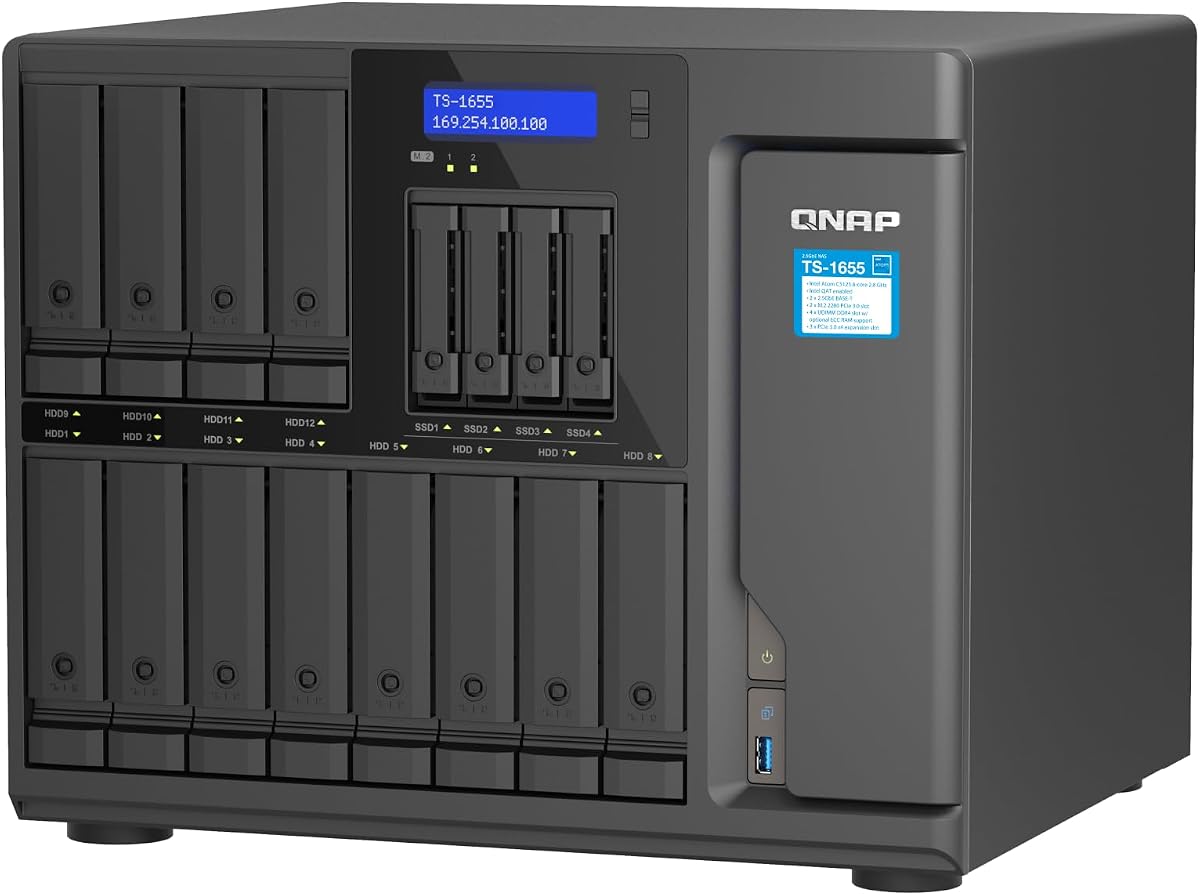
The QNAP TS-1655-8G-US stands out as a top-tier hybrid NAS enclosure designed for serious power users and small businesses. With a rating reflecting solid performance, it balances capacity and speed effectively.
We may earn a commission when you buy through this link, at no additional cost to you.
Its Intel Atom C-5125 processor delivers reliable throughput for virtualization and large backup tasks. The mix of 3.5 and 2.5-inch bays allows flexible drive selection for varied workloads.
While the default RAM is sufficient for basic use, upgrading to higher capacities unlocks more virtual machines. Fan noise can be noticeable in quiet environments but is acceptable for server rooms.
This enclosure is ideal for those needing long-term availability and robust expansion. It offers the best blend of price and performance for enterprise-grade storage needs.
The processor handles multiple simultaneous tasks smoothly, ensuring quick access to files during peak business hours.
Mixing SSDs and HDDs in hybrid bays allows you to optimize for both speed and cost efficiency.
We may earn a commission when you buy through this link, at no additional cost to you.
Synology's RS4021xs+ is a powerhouse designed for enterprise environments where reliability and speed are non-negotiable. Its high IOPS rating ensures quick data retrieval for critical applications.
We may earn a commission when you buy through this link, at no additional cost to you.
The inclusion of redundant power supplies means your data remains protected even during power failures. This unit supports massive expansion to 40 bays, making it future-proof for growing companies.
The main drawback is the premium price point which might stretch budgets for smaller setups. Additionally, the interface is rich with features that may require time to master effectively.
For businesses needing robust continuity and high-speed access, this is the definitive choice. It excels in hosting compute-intensive services without compromising stability.
Dual power units ensure continuous operation even if one unit fails unexpectedly during critical processes.
Adding expansion units allows seamless growth from 16 to 40 bays without disrupting existing workflows.
We may earn a commission when you buy through this link, at no additional cost to you.
This QNAP model serves as a dedicated storage expansion unit that pairs perfectly with existing NAS hosts. It brings reliable capacity to data centers needing organized rackmount solutions.
We may earn a commission when you buy through this link, at no additional cost to you.
The short depth design saves valuable space in small media cabinets where deep units might block airflow or cabling. Redundant power supplies keep storage available during maintenance or power issues.
Since it is a JBOD unit it lacks internal computing power which requires a separate QNAP NAS controller to function fully. This adds complexity but keeps costs lower than standalone full systems.
Ideal for organizations looking to scale storage petabyte-level without replacing their current server setup. It provides a cost-effective path to massive capacity in tight spaces.
The compact depth allows installation in shallow racks where standard units would not fit comfortably.
Mini-SAS HD ports simplify connections and reduce cable clutter behind your server racks.
We may earn a commission when you buy through this link, at no additional cost to you.
The TL-D1600S is an affordable desktop enclosure that brings massive storage to any PC with a PCIe slot. It includes the necessary card for immediate setup without extra purchases.
We may earn a commission when you buy through this link, at no additional cost to you.
Its 16 bays support both SATA 3.5 and 2.5-inch drives making it versatile for mixing different drive types and capacities easily. This flexibility makes it perfect for media archives.
The lack of built-in networking means it must connect directly via PCIe so remote access requires the host machine to be on. Noise levels can be noticeable depending on the case environment.
For budget-conscious users needing direct attached storage capacity this is the best value. It turns any workstation into a powerful local storage hub effectively.
The included interface card simplifies installation and ensures immediate recognition by your host operating system.
It works seamlessly with Windows and Linux systems offering broad utility for diverse server environments.
We may earn a commission when you buy through this link, at no additional cost to you.
This Asustor unit brings enterprise-level features to the enthusiast market with ECC memory and high-speed network ports. It handles heavy virtualization and AI workloads with impressive stability.
We may earn a commission when you buy through this link, at no additional cost to you.
The USB4 connectivity offers unmatched external transfer speeds for 4K workflows or large data backups. Dual 10GbE ports ensure your network is never the bottleneck for file transfers.
While powerful it is priced higher than comparable options and offers fewer drive bays which might limit total capacity for very large archives. The feature set justifies the cost for pros.
Best suited for creative studios and IT labs needing extreme speed and stability. It balances power and flexibility better than most competing mid-range enclosures.
ECC RAM prevents data corruption during critical tasks ensuring your projects remain safe and consistent.
USB4 ports allow lightning-fast external backups and connections to professional peripherals without bottlenecks.
We may earn a commission when you buy through this link, at no additional cost to you.
The DS3622xs+ is a capable all-rounder designed for businesses running virtual machines and media servers simultaneously. Its Xeon processor provides robust handling for multi-service environments.
We may earn a commission when you buy through this link, at no additional cost to you.
Users can expand to 48GB of RAM which is essential for running multiple VMs efficiently. The support for NVMe caching ensures frequent data is accessed instantly for better workflows.
The base configuration lacks high RAM which requires a quick upgrade to unlock full potential. The price reflects high-end enterprise features but may be steep for home labs.
It is the right choice for growing businesses needing a mix of compute and storage. Its ability to scale to 36 bays makes it a solid long-term investment.
The CPU handles multiple operating systems well allowing you to host diverse services on one device.
Adding DX1222 units allows growth to 36 bays ensuring your storage scales with your business needs.
We may earn a commission when you buy through this link, at no additional cost to you.
For DIY enthusiasts wanting to build a custom server this chassis offers unmatched flexibility with support for large motherboards and GPUs. It turns any PC into a serious NAS unit.
We may earn a commission when you buy through this link, at no additional cost to you.
The 15 drive bays allow for massive storage configurations ideal for personal archives or small office needs. Hot swap capability ensures you can replace drives without shutting down the system.
Shipping times can be long due to sea freight which requires planning ahead for your project. Assembly is more involved than buying a pre-built system but offers greater customization.
Best for those who value hardware flexibility and want to choose their own components. It is a robust foundation for a personalized high-performance server build.
Accommodates various motherboard sizes and graphics cards enabling you to design a system tailored to your needs.
Heavy steel construction ensures durability and stability even with full drive loads mounted inside.
We may earn a commission when you buy through this link, at no additional cost to you.
This enclosure provides a straightforward way to add twelve drives directly to a computer via USB. It is perfect for personal backups or transferring large datasets quickly.
We may earn a commission when you buy through this link, at no additional cost to you.
The aluminum body helps dissipate heat during high-speed transfers while keeping the unit sturdy. Tool-free access makes swapping drives effortless without needing extra tools.
Since it lacks network capabilities it is not suitable for shared storage across multiple devices. It is strictly a direct attach solution which limits its use cases.
Ideal for individuals needing a high-capacity external drive array without network complexity. It delivers reliable performance for single-user workloads at a low cost.
USB 3.0 speeds allow quick movement of large files directly to your workstation or laptop.
Built-in fans combined with aluminum material keep drives cool during continuous operation.
We may earn a commission when you buy through this link, at no additional cost to you.
For Synology users this expansion unit integrates directly into the existing management interface for a seamless experience. It allows your system to grow without migrating data or changing software.
We may earn a commission when you buy through this link, at no additional cost to you.
The unified tools in DSM handle the new drives automatically which simplifies management significantly. Its high rating reflects consistent reliability and ease of use for home and office.
It requires a compatible Synology host unit which limits flexibility if you switch ecosystems later. It adds a separate power requirement which increases cable clutter on your desk.
Best for existing Synology owners needing to expand storage with zero hassle. It is the smoothest path to adding capacity within the Synology environment.
The interface treats expansion drives as part of the main unit for simplified administrative control.
You can stack multiple units to reach up to 36 bays as your data needs grow over time.
We may earn a commission when you buy through this link, at no additional cost to you.
This model emphasizes reliability with long-term availability support ensuring you get consistent updates and parts for years. It is an excellent hybrid option for mixed SSD and HDD setups.
We may earn a commission when you buy through this link, at no additional cost to you.
The Intel Atom processor provides enough power for daily virtualization tasks without overheating. Its hybrid bays allow efficient use of SSDs for cache while keeping bulk storage on HDDs.
Upgrading RAM is recommended for heavy virtualization workloads to ensure smooth performance over time. Fan noise may be noticeable in quiet rooms but is manageable in server racks.
A strong choice for users seeking a stable hybrid NAS with a predictable future. It balances performance and cost effectively for small business needs.
Long-term availability guarantees help you plan multi-year deployments without worrying about obsolescence.
M.2 slots allow strategic placement of SSDs to speed up frequent data access automatically.
We may earn a commission when you buy through this link, at no additional cost to you.
Selecting the right 16 bay NAS enclosure involves understanding your specific storage capacity, speed, and redundancy requirements.
Check if the unit supports both 3.5 and 2.5-inch drives. Many hybrid units allow you to mix HDDs for bulk storage with SSDs for speed.
Ensure the enclosure supports your desired drive types for maximum flexibility.
Look for multi-core processors like Intel Atom or Xeon if you plan to run virtual machines or handle media transcoding.
A capable CPU ensures smooth performance when running multiple services simultaneously.
ECC RAM support is vital for critical business data to prevent corruption. Aim for at least 16GB if you run complex apps.
Upgradable memory extends the system's lifespan for heavier future workloads.
Evaluate whether you need standard Gigabit Ethernet or faster 10GbE for large file transfers.
High-speed networking reduces bottlenecks during heavy data access periods.
Consider if the unit supports additional expansion units or daisy chaining to grow beyond 16 bays.
Scalability ensures your storage grows with your data needs over time.
Redundant power supplies are essential for business continuity to prevent downtime during outages.
Always check for backup power features if uptime is a priority for your workflow.
Aluminum or heavy-duty steel chassises help dissipate heat and protect internal components physically.
Durable construction ensures the unit lasts longer under continuous operational stress.
Choose a unit with a user-friendly interface that allows quick setup and monitoring.
Unified tools save time and reduce the risk of configuration errors.
Begin by installing your drives according to the hot swap guidelines. Ensure each drive is recognized individually to avoid data loss during initial setup.
Regularly update your firmware and software to maintain security and performance. Set up alerts for fan speeds and temperatures to catch hardware issues early.
Keep the enclosure in a well-ventilated area to prevent overheating. Dust filters should be cleaned periodically to ensure proper airflow inside the chassis.
A NAS includes built-in operating systems for file sharing while JBOD units provide storage capacity attached to another computer. NAS units allow network access without a host PC.
Most options listed are sold diskless meaning you must purchase hard drives separately. This allows you to choose specific brands and capacities for your needs.
Some units like the Synology RS4021xs+ can connect to additional expansion units to reach up to 40 bays. Others support daisy chaining via USB or specific ports.
Many units like the CENMATE offer plug-and-play compatibility with Mac and Linux systems. However, full NAS features often require a proprietary OS like DSM or QTS.
ECC RAM detects and corrects data corruption to ensure file integrity. It is highly recommended for mission-critical data where accuracy matters most.
Yes, if you manage large media libraries or need local backups for multiple devices. It offers more capacity than typical consumer options but may be overkill.
Many units include fans that produce moderate noise. Place them in a server closet or office space away from quiet living areas.
Most premium brands offer 5-year warranties. Always check the specific seller details for any extended protection or support options.
The top choices balance performance capacity and reliability for varied storage needs. The QNAP TS-1655-8G-US stands out for hybrid versatility and strong expandability.
Prioritize your specific workloads when selecting a unit. Business continuity requires redundancy while enthusiasts need high-speed ports and memory.
Always verify current listings before purchase to ensure the latest specs and pricing align with your expectations.