
Alstar Laser Collimator Alignment for Marca Newtonian Telescopes 1.25 Inch
4.5Editor score
Front opening with side window
Adjustable brightness settings
Accurate collimation in minutes
Achieving precise optical alignment is crucial for any Newtonian reflector telescope owner who wants crisp images. A high-quality laser collimator simplifies this process significantly, ensuring your mirrors are perfectly aligned for optimal performance.
We evaluated ten top-rated laser collimators based on build quality, calibration stability, ease of use, and compatibility with standard focusers. Each product was assessed for its ability to deliver accurate results in various lighting conditions.
Each pick below highlights specific strengths like adjustable brightness, dual-size adapters, or premium materials. Prices and availability change frequently, so always verify current listings before making your final purchase decision.
4.5Editor score

4.5Editor score
4.7Editor score
As an Amazon Associate we earn from qualifying purchases.
The following comparison table provides a side-by-side overview of the key specifications and features for all ten laser collimators reviewed in this guide to help you make an informed choice.
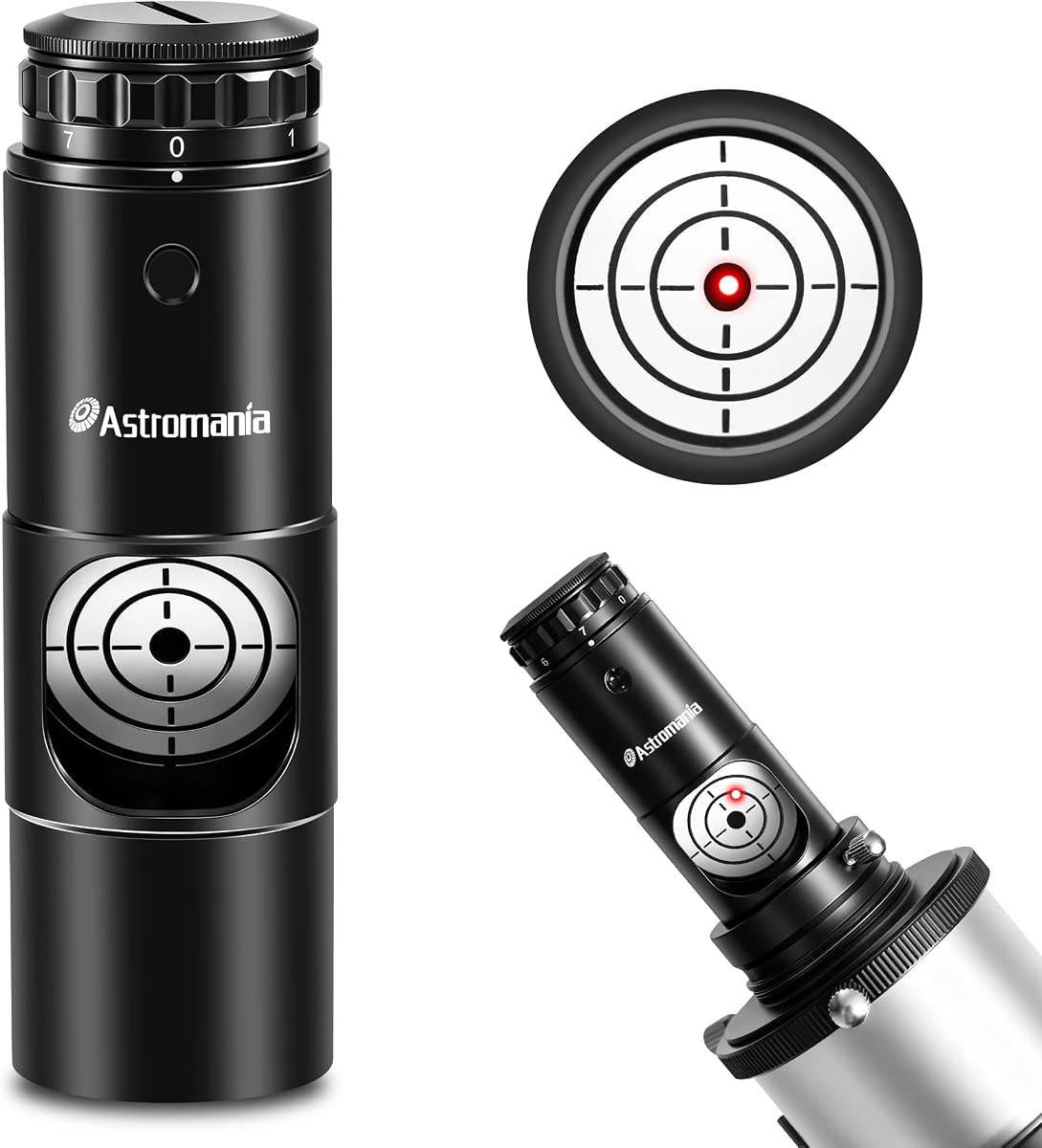


The Astromania Laser Collimator stands out as a versatile tool for Newtonian telescope owners needing reliable alignment. With a rating of 4.5 stars, it offers a solid balance of precision and ease of use for both beginners and experienced astronomers.
We may earn a commission when you buy through this link, at no additional cost to you.
Its removable 2-inch adapter ensures compatibility with both standard 1.25-inch and 2-inch focusers, making it a future-proof investment. The laser beam features seven brightness levels allowing you to adjust intensity for bright rooms or dark skies comfortably.
While the build quality is excellent with anodized aluminum, users should note that the battery is included but may need replacement after extended periods. The side window helps verify reflection alignment accurately without needing additional tools or help.
This model is ideal for anyone seeking a dependable collimator that grows with their telescope setup. It delivers clear views quickly and maintains calibration well, making it a top recommendation for serious stargazers.
The removable 2-inch adapter allows seamless transition between different focuser standards without buying separate units.
Complying with Class 3R safety standards, the laser ensures safe usage while maintaining optical precision for clear imaging.
We may earn a commission when you buy through this link, at no additional cost to you.
This compact collimator from Astromania is designed specifically for telescopes with standard 1.25-inch focusers. Rated 4.5 stars, it provides a reliable solution for precise collimation without the bulk of larger units.
We may earn a commission when you buy through this link, at no additional cost to you.
The metal construction ensures durability against wear and tear while the compact body fits naturally in your palm. It allows smooth movement within focusers, making alignment tasks efficient even during long observing sessions.
While it lacks the 2-inch adapter of its bigger brother, it is perfect for those who do not plan to upgrade soon. The brightness adjustment and clear instructions help beginners achieve accurate results quickly and confidently.
For owners of standard Newtonian scopes, this tool offers exceptional value. It delivers consistent results and maintains calibration well, making it a favorite for casual and regular observers alike.
Its compact body allows for easy handling and transport to dark sky sites without adding significant weight to your kit.
Precision engineering ensures that once calibrated, the unit maintains its alignment for consistent results over time.
We may earn a commission when you buy through this link, at no additional cost to you.
SVBONY delivers a robust collimator that supports both 1.25 and 2-inch telescopes with a removable adapter. With a strong 4.5-star rating, it simplifies the alignment process for a wide range of reflector scopes.
We may earn a commission when you buy through this link, at no additional cost to you.
The triple cemented lens improves stability of the red dot ensuring a clear and steady beam for precise adjustments. Users can adjust brightness across seven levels making it effective in various lighting conditions during setup.
One minor downside is that like many similar units, it may require battery replacements after extended use. However, the included instructions are detailed and the build quality suggests longevity for years of reliable service.
This collimator is an excellent choice for those planning to upgrade their telescopes. It allows you to calibrate different sizes without buying separate tools, offering great flexibility and value.
The triple cemented lens design ensures the laser beam stays stable and aligned during use for better accuracy.
The removable 2-inch adapter means you can upgrade your focuser later without needing a new collimator unit.
We may earn a commission when you buy through this link, at no additional cost to you.
This bundle includes both a laser collimator and a wide-angle telescope lens offering a comprehensive upgrade package. The collimator features adjustable laser settings suitable for various lighting conditions and user comfort during alignment.
We may earn a commission when you buy through this link, at no additional cost to you.
The included 62-degree aspheric eyepiece provides maximum detail and definition across the entire field of view for enhanced viewing experiences. It creates an immersive feeling of being lost in space while observing lunar or deep sky targets.
While the laser collimator is high quality, the additional lens is separate from the alignment process itself. Buyers should ensure they need both items to justify the cost over buying a standalone collimator tool.
For those looking to improve both alignment and viewing quality simultaneously, this bundle is a smart choice. It combines essential tools in one package to simplify your astronomy setup.
The 62-degree eyepiece offers a wide field of view that enhances detail and immersion during observation sessions.
The adjustable laser settings allow for comfortable use in different environments while maintaining precise alignment.
We may earn a commission when you buy through this link, at no additional cost to you.
The Alstar Laser Collimator is an excellent budget option for telescope owners needing reliable alignment tools. It comes fully adjusted but allows further fine-tuning if needed for optimal optical performance.
We may earn a commission when you buy through this link, at no additional cost to you.
Its design includes a front opening for beam emission and a side window to view the reflection at 45 degrees. This feature allows you to see if the laser reflects back on itself confirming accurate alignment.
While the battery is not included, the unit is designed for quick replacement using a rear screw cap. The metal construction ensures durability and the clear instructions help even newcomers achieve precise results.
For hobbyists watching their budget without sacrificing quality, this model is highly recommended. It delivers fast and accurate collimation making telescope setup faster and more enjoyable.
The side window allows you to visually confirm when the laser reflects back on itself for accurate alignment checks.
Clear instructions in multiple languages guide even new users through the process of adjusting a Newtonian telescope easily.
We may earn a commission when you buy through this link, at no additional cost to you.
This Alstar model supports both 1.25 and 2-inch focusers making it a versatile budget option. It features a standard fit with an included adapter ensuring compatibility with most Newtonian reflector telescopes.
We may earn a commission when you buy through this link, at no additional cost to you.
The unit comes pre-calibrated with three adjustment openings for fine-tuning when needed. The metal construction ensures longevity while the clear instructions guide users through the alignment process step by step.
While it has a slightly lower rating than some competitors, it remains a reliable tool for accurate collimation. The battery replacement mechanism is simple and the side window helps monitor beam reflection accurately.
For those needing dual-size compatibility at an affordable price, this is a strong contender. It delivers solid performance and durability suitable for regular telescope maintenance and use.
Three 120-degree adjustment openings allow for meticulous calibration and fine-tuning of the laser beam alignment.
The included 2-inch adapter ensures you can use this tool with a wide range of telescope focuser standards.
We may earn a commission when you buy through this link, at no additional cost to you.
This bundle includes a laser collimator and a cell phone adapter allowing for easy smartphone astrophotography. The collimator itself supports both 1.25 and 2-inch focusers offering great versatility for different telescope setups.
We may earn a commission when you buy through this link, at no additional cost to you.
The phone clamp works with a wide range of devices securing them safely for imaging. It features a steel bolt mechanism rather than a spring ensuring a secure hold during captures.
While the collimator is solid and bright, the phone adapter adds value for those interested in capturing lunar or planetary images. Users should handle the clamp carefully to avoid scratching sensitive camera lenses.
For photographers looking to integrate mobile imaging with telescope alignment, this bundle is a great option. It combines essential tools to streamline both setup and capture processes.
The included adapter supports a wide range of smartphones making it easy to capture images through your telescope eyepiece.
The laser collimator ensures your optics are aligned properly before you attempt to capture any images.
We may earn a commission when you buy through this link, at no additional cost to you.
This bundle combines a red laser collimator with a Cheshire eyepiece providing tools for both day and night alignment. The laser is adjustable across seven levels while the Cheshire requires no batteries and works well in daylight.
We may earn a commission when you buy through this link, at no additional cost to you.
The Cheshire eyepiece is precision machined with fine crosshairs for accurate secondary mirror collimation. It is especially useful when you do not have access to power or need quick alignment checks during setup.
Users benefit from having two methods to verify alignment ensuring flexibility in any observing environment. The bundle is highly rated because it covers all bases for a well-aligned Newtonian telescope.
For those who want a complete toolkit for maintenance, this bundle is an outstanding choice. It ensures you always have the right tool ready regardless of lighting conditions.
The Cheshire eyepiece allows for accurate alignment without batteries or a laser making it ideal for daytime checks.
Combining laser and Cheshire tools ensures you can align your telescope in any lighting situation efficiently.
We may earn a commission when you buy through this link, at no additional cost to you.
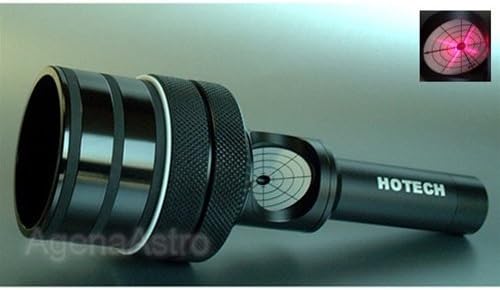
The HoTech SCA Laser Collimator separates itself from others with its patented self-centering adapter technology. This innovation eliminates the common problem of adapter slop ensuring precise and repeatable installation every time.
We may earn a commission when you buy through this link, at no additional cost to you.
Unlike standard collimators that may shift slightly in the focuser, this unit locks in place perfectly along the optical axis. This feature is critical for high-precision collimation required for astrophotography or demanding visual use.
While it is more expensive than other options, the investment pays off in accuracy and reliability. It works with both 1.25 and 2-inch focusers and is compatible with a wide range of telescope brands.
For serious astronomers and imagers who cannot afford alignment errors, this is the top choice. It delivers unmatched precision and consistency for professional-grade telescope performance.
The patented SCA technology eliminates slop ensuring the laser stays aligned with the optical axis consistently.
Precision engineering allows for repeatable installation and calibration accuracy for critical imaging sessions.
We may earn a commission when you buy through this link, at no additional cost to you.
The Ocal Pro V4.0 is a cutting-edge electronic collimator designed for Newtonian and Schmidt Cassegrain telescopes. It features built-in calibration circles and software guidance to enable quick precise optical axis adjustments.
We may earn a commission when you buy through this link, at no additional cost to you.
Each unit comes factory-centered to pixel-level precision ensuring you start with optimal baseline accuracy. This digital approach removes the guesswork of manual adjustments making it ideal for critical imaging sessions.
The all-in-one design allows for complete collimation functionality on-the-go. Its portability and ease of use make it a modern solution for astronomers who prefer digital tools over traditional laser devices.
For those seeking high-tech precision and smartphone integration, this tool stands out. It delivers professional-grade results in a user-friendly package perfect for modern astronomy setups.
The built-in software guides adjustments with calibration circles ensuring fast and precise alignment of the optical axis.
Each unit is factory-centered to pixel-level precision ensuring optimal baseline accuracy right out of the box.
We may earn a commission when you buy through this link, at no additional cost to you.
Choosing the right laser collimator involves considering your telescope type, focuser size, and precision needs. This section outlines key factors to help you make an informed decision.
Check if your telescope uses a standard 1.25-inch or a larger 2-inch focuser. Some collimators come with removable adapters to support both sizes while others are fixed to one.
Look for models that match your current setup or offer a removable adapter if you plan to upgrade later.
Adjustable brightness is crucial for using the collimator in various lighting conditions. Models with multiple levels let you reduce glare in bright rooms or increase visibility under dark skies.
Prioritize collimators with a brightness adjustment feature to ensure comfortable and accurate alignment sessions.
A sturdy metal body resists wear and tear ensuring the collimator lasts for years. Anodized aluminum or premium metal construction adds reliability and protects internal components.
Choose a model with solid construction to maintain calibration and prevent misalignment from accidental drops.
High-precision units maintain their calibration longer so you do not need to adjust them frequently. Look for features like sealed adjustments or patented technology to reduce drift.
Invest in a collimator with proven calibration stability to ensure consistent results every time you use it.
User-friendly designs with clear side windows and straightforward instructions make alignment easier. Look for features that allow single-person operation without needing extra hands or tools.
Select a collimator that simplifies the process so you can focus on observing rather than struggling with setup.
Prices vary from budget-friendly options to high-end precision tools. Consider what features matter most to you such as adapters or software to find the best value.
Choose a collimator that balances cost with the features you need for your specific telescope and usage level.
Most units use standard batteries like CR2032 or CR123A that are easy to replace. Some come with batteries included while others require you to buy them separately.
Check the battery type before buying to ensure you can source replacements easily for uninterrupted use.
Some bundles include extras like phone adapters, Cheshire eyepieces, or wide-angle eyepieces. These add value if you need them for imaging or daytime alignment.
Decide if additional features justify a higher cost based on your specific needs and preferences.
To use your collimator, insert it into the focuser and turn on the laser. Rotate the unit to ensure the beam is centered then adjust the telescope screws until the laser hits the center spot on the primary mirror.
After alignment, cover the laser lens when not in use to prevent dust buildup. Store the unit in a soft case to protect it from bumps and ensure the battery is removed if not used for long periods.
Periodically verify the collimator's accuracy using a secondary tool like a Cheshire eyepiece. This ensures the unit itself remains true and you can trust the alignment for clear views.
A laser collimator ensures your telescope mirrors are precisely aligned which is essential for sharp and clear views. Without proper alignment, your images will appear blurry or distorted regardless of the quality of your optics.
Yes, you can use a laser collimator in daylight as the beam is bright enough to be seen against the sky. However, using a Cheshire eyepiece might be easier for daytime alignment due to ambient light levels.
You can check accuracy by rotating the collimator in the focuser to see if the beam stays in one spot. If it circles, the unit needs recalibration or may have manufacturing defects affecting precision.
Yes, the battery type matters because some models require specific lithium batteries like CR2032 or CR123A. Ensure you have the correct batteries on hand to avoid interruptions during your alignment process.
You can use a 1.25-inch collimator on a 2-inch focuser if it comes with a removable adapter. Without one, the unit will be loose and may shift leading to inaccurate collimation results.
It is best to collimate your telescope before every observing session especially if you transport it frequently. Temperature changes and handling can shift the mirrors requiring regular checks for optimal performance.
A laser collimator projects a beam for precise alignment and works well at night while a Cheshire eyepiece uses reflections and works best in daylight. Both tools have their strengths depending on lighting conditions and preference.
Yes, laser collimators emit beams that can be harmful to eyes if viewed directly. Always ensure the laser is pointed safely away from people or animals and follow the manufacturer's safety guidelines.
We reviewed ten top laser collimators ranging from budget-friendly options to premium precision tools. The Astromania 1.25/2-inch collimator stands out as the best overall choice for its versatility and reliability.
When selecting a collimator prioritize compatibility with your focuser size and the level of precision you need. For casual observers a budget model suffices while imagers may require high-end precision for clear images.
Remember that prices and availability change so always verify current listings before purchasing. Choosing the right tool ensures your telescope performs at its best for years of clear stargazing.