
Neoteck 10kHz LCR Meter Tweezers
4.7Editor score
10kHz test frequency option
Auto component identification
Rotatable color display
This guide compares the top ten Lcr Meter Tweezer options for electronics repair and design, evaluating accuracy, frequency ranges, and usability features for
Selecting the right Lcr Meter Tweezer is crucial for anyone working with modern electronics. These compact tools combine precision measurement with ergonomic design, allowing technicians to test components directly on circuit boards without bulky probes. A good unit offers reliable accuracy across resistance, capacitance, and inductance ranges while remaining portable for field work.
We evaluated ten standout models based on their technical specifications, user feedback, and real-world application scenarios. Our analysis focuses on measurement accuracy, frequency options, display clarity, and build quality. Each product was assessed for its ability to handle both surface-mount devices and through-hole components efficiently during complex repair or development tasks.
Every pick in this list highlights unique strengths tailored to different user needs and budgets. Whether you prioritize budget-friendly functionality or professional-grade precision, these options cover the spectrum. Note that pricing and availability can shift frequently, so checking current listings before purchase ensures you get the best value for your specific requirements today.
4.7Editor score

4.3Editor score

4.7Editor score
The following table provides a side-by-side comparison of all ten models reviewed in this guide. It highlights key specifications such as measurement ranges, accuracy levels, display types, and unique features to help you quickly identify which device matches your technical needs.
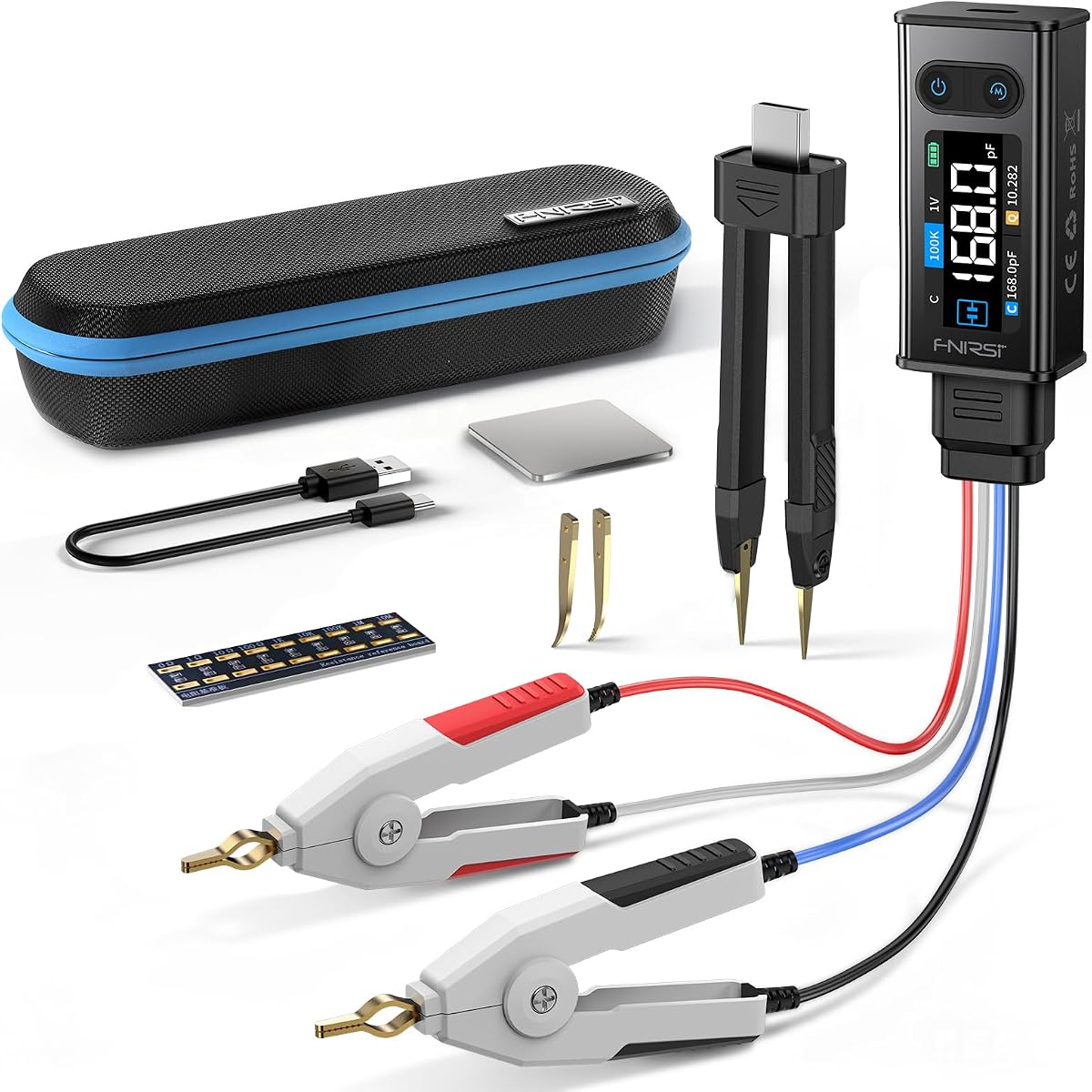

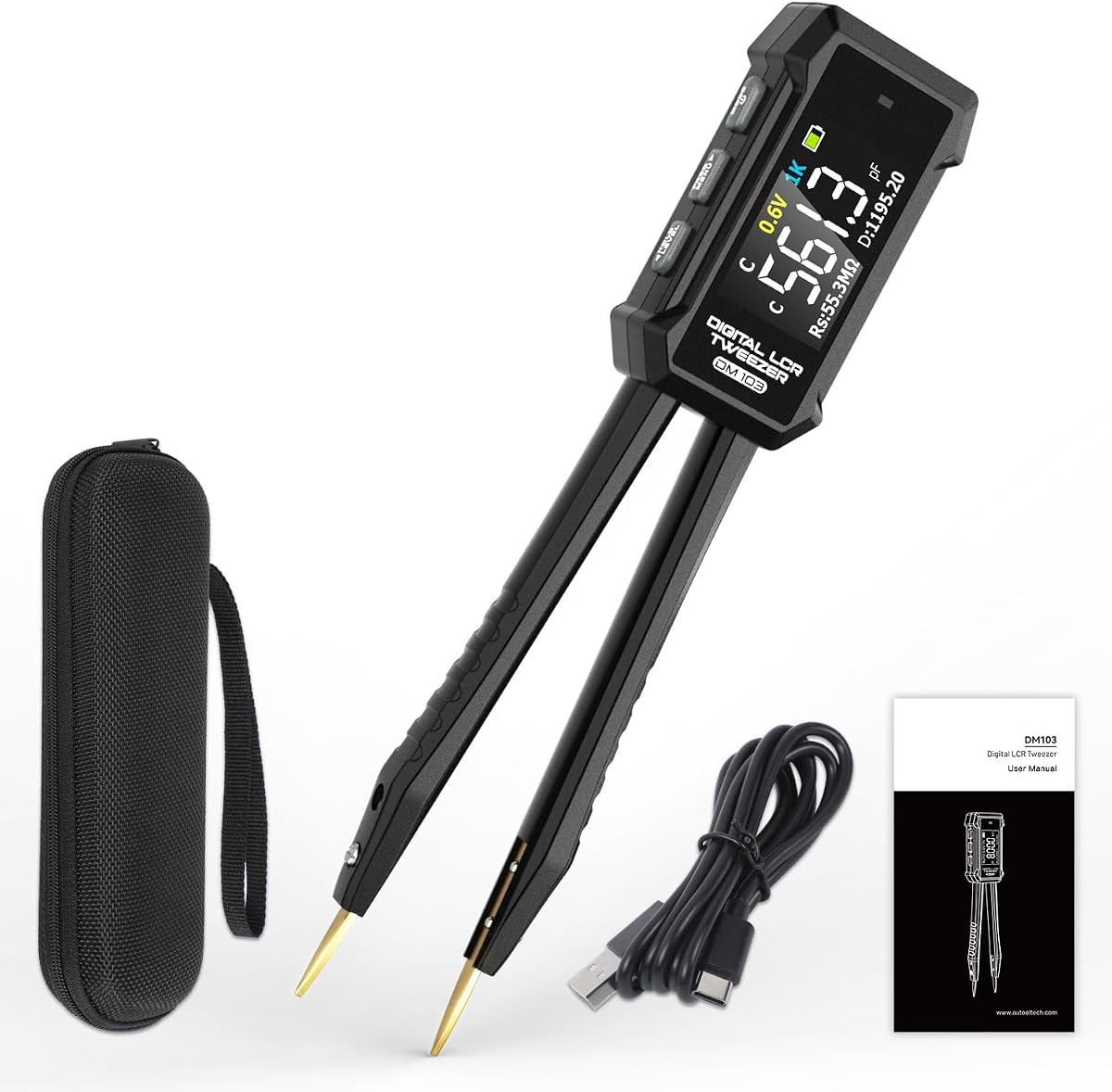


The FNIRSI LCR-ST1 stands out as a versatile option for technicians needing reliable component testing on the go. With a solid 4.3 rating from users, it balances functionality and portability effectively. Its ability to measure resistance, capacitance, inductance, and diodes makes it a comprehensive tool for electronics work.
We may earn a commission when you buy through this link, at no additional cost to you.
This model supports three test frequencies including 10kHz which is crucial for accurate readings on modern SMD components. The auto recognition feature simplifies the workflow by identifying parts without manual mode switching. Data storage and export capabilities allow engineers to track measurements over time efficiently.
While the display is fixed and cannot rotate, which might limit viewing angles in tight spaces, the 1.14 inch HD screen remains readable. The inclusion of two tweezer head types ensures adaptability for different component shapes. These minor trade-offs are outweighed by its robust feature set at this level.
Ideal for repair shops and hobbyists alike, the LCR-ST1 delivers consistent performance without breaking the bank. Its rechargeable battery and Type-C charging ensure you stay powered during long sessions. This unit represents a strong starting point for those seeking a professional-grade tweezer meter.
Auto recognition and dual head options reduce setup time significantly during complex repairs.
Exporting test records via PC helps maintain accurate logs for warranty or compliance needs.
We may earn a commission when you buy through this link, at no additional cost to you.
The Neoteck 10kHz LCR Meter Tweezers offer exceptional value for users on a budget without sacrificing critical features. Boasting a high 4.7 rating, it is a favorite among DIY enthusiasts and entry-level technicians. Its auto identification and multi-parameter display help diagnose component health quickly.
We may earn a commission when you buy through this link, at no additional cost to you.
A standout feature is the 180-degree rotatable display, which enhances usability in awkward positions. The tool supports three test frequencies allowing flexibility for various component types. Data storage paired with Excel export ensures you can keep detailed records of your testing history easily.
While the maximum frequency is limited to 10kHz compared to higher-end models, it covers most common repair tasks effectively. The smaller battery might require more frequent charging during extended use. These limitations are acceptable given the price point and overall functionality provided.
For those starting in electronics repair or needing a secondary tester, this unit is highly recommended. It combines essential measurement capabilities with user-friendly design elements. The Neoteck option proves that quality testing tools do not have to be expensive.
The rotatable screen ensures clear visibility regardless of how you hold the device.
Auto ID and Excel export save time during batch testing of multiple components.
We may earn a commission when you buy through this link, at no additional cost to you.
The Smart Tweezers ST5S is a benchmark for precision in the Lcr Meter Tweezer category. Rated 4.7, it is trusted by professionals who demand the highest accuracy levels. The 0.1% accuracy rating and included calibration certificate make it suitable for critical applications where margin for error is minimal.
We may earn a commission when you buy through this link, at no additional cost to you.
Its ClearValue OLED display provides excellent visibility even in low light conditions. The Swiss-made 24K gold-plated test leads ensure reliable contact and longevity over years of use. Spare leads and a protective case are included, emphasizing its premium build quality and attention to detail.
The higher cost might deter casual users, but for professionals the investment pays off in reliability. The interface is functional but lacks some modern features found in newer models. Despite this, the core performance remains unmatched in terms of measurement fidelity and durability.
Choosing the ST5S means prioritizing accuracy and long-term value over initial savings. It is ideal for calibration labs, advanced engineering, and serious repair specialists. This model sets the standard for what a professional Lcr Meter Tweezer should achieve.
Calibration certificates and tight tolerances ensure compliance with industry standards.
High-quality materials and lifetime support guarantee consistent performance over time.
We may earn a commission when you buy through this link, at no additional cost to you.
The Pro1-100KHz LCR Meter delivers top-tier performance with a perfect 5.0 rating from users. Its 0.1% accuracy and five test frequencies including 100kHz make it suitable for complex RF and high-frequency tasks. This model bridges the gap between standard tweezers and laboratory-grade instruments.
We may earn a commission when you buy through this link, at no additional cost to you.
With measurement ranges extending from 10mΩ to 10MΩ and 10nH to 1H it covers an impressive variety of components. The inclusion of diode testing adds versatility to its core LCR functions. Users appreciate the robust build quality that withstands demanding work environments.
However, it lacks some modern conveniences like USB data export which might limit workflow integration. Documentation could be more detailed for new users. These factors are minor compared to the superior measurement capabilities provided by this unit.
Best suited for advanced users needing broad frequency coverage, the Pro1 is a reliable choice. It ensures precise readings even on challenging components where lower-end models might struggle. This tool is essential for those who cannot compromise on measurement fidelity.
Support for 100kHz enables testing of RF components often missed by standard testers.
The 0.1% accuracy ensures confidence in results for critical circuit designs.
We may earn a commission when you buy through this link, at no additional cost to you.
The DM103 LCR Meter Tweezer introduces user-defined calibration to combat accuracy drift over time. Rated 4.2, it offers 0.5% accuracy which is competitive for its class. This feature is a significant advantage for maintaining precision without external calibration services.
We may earn a commission when you buy through this link, at no additional cost to you.
Its OLED display can flip horizontally, enhancing usability for left or right-handed users. The adjustable frequency and voltage options allow tailored testing for different component sensitivities. A compact ergonomic design makes it easy to handle during delicate SMD work.
While it does not match the 0.1% accuracy of premium models, the ability to calibrate internally keeps it relevant. The battery life is decent but may require more frequent charging under heavy use. Overall it balances technical performance with practical usability effectively.
Ideal for technicians who need consistent accuracy without professional lab access, the DM103 is a smart pick. It ensures reliable results through regular self-calibration. This tool is particularly useful for maintenance teams managing large inventories.
User calibration keeps measurement accuracy stable over long periods of use.
Flip screen and compact size reduce hand fatigue during extended testing sessions.
We may earn a commission when you buy through this link, at no additional cost to you.
The LT1 Mini LCR Meter Tweezer packs advanced features like a signal generator into a portable form factor. With a 4.8 rating, it appeals to users needing multifunction capabilities. It measures standard LCR parameters plus voltage, frequency, and diode continuity efficiently.
We may earn a commission when you buy through this link, at no additional cost to you.
The auto screen rotation adapts to hand orientation, improving readability in tight spots. A 400mAh battery supports long usage times before recharging is needed. The frequency sweep function helps identify resonant frequencies in components which is valuable for troubleshooting.
While the menu system can be complex due to the feature density, it offers unmatched versatility. The maximum frequency is capped at 10kHz which limits RF applications. However, for general electronics repair this breadth of tools is highly advantageous.
Best for versatile workbenches requiring one tool to handle multiple tasks, the LT1 is robust. Its signal generator and auto ID features streamline diagnostics significantly. This unit is perfect for engineers needing extra functionality without adding more devices.
Built-in signal generator and frequency sweep expand testing beyond standard LCR.
Auto screen rotation ensures visibility regardless of how the tool is held.
We may earn a commission when you buy through this link, at no additional cost to you.
The FNIRSI LCR-ST2 stands out with a 100kHz max frequency, making it ideal for RF and high-speed circuits. Rated 4.3, it combines precision with practical design elements like a rear magnetic mount. The 1.47 inch HD display ensures readings are easy to read even from a distance.
We may earn a commission when you buy through this link, at no additional cost to you.
Four RMS test levels and series/parallel modes reduce parasitic effects for more reliable data. The kit includes Kelvin clips and gold-plated tips for diverse testing needs. This comprehensive package supports both SMD and through-hole components seamlessly.
The larger form factor might feel bulky in one-hand use compared to slimmer models. While this provides better stability, it may not fit in very tight spaces. These trade-offs are standard for units offering such broad frequency capabilities.
Recommended for professionals dealing with high-frequency electronics, the LCR-ST2 is a strong choice. Its magnetic mount keeps the device secure on metal workbenches. This model offers the advanced performance needed for complex diagnostic tasks.
100kHz support ensures accurate measurement of components used in wireless circuits.
The magnetic mount prevents accidental drops and keeps the workspace organized.
We may earn a commission when you buy through this link, at no additional cost to you.
The AUTOOL DM103 features a vivid IPS color display that offers excellent viewing angles. Rated 4.5, it combines smart auto recognition with 0.5% accuracy for reliable everyday use. The dual parameter display helps analyze component quality and aging effectively.
We may earn a commission when you buy through this link, at no additional cost to you.
Gold-plated precision probes ensure stable contact even on small or oxidized pads. Firmware upgrades via Type-C connection allow the device to stay current with improvements. This focus on longevity makes it a valuable investment for repair shops.
While the frequency range is limited to 10kHz, it covers most common applications adequately. Basic calibration is included but lacks the advanced user options of competitors. These limitations are minor given the display quality and connectivity features.
Ideal for teams needing clear visibility and consistent performance, the DM103 is a smart buy. The IPS screen reduces eye strain during long sessions. This tool balances modern connectivity with practical measurement needs well.
IPS display ensures readable text from any angle in various lighting conditions.
Firmware updates allow the device to adapt to new testing standards over time.
We may earn a commission when you buy through this link, at no additional cost to you.
The Global Specialties LCR-58 is a trusted name in industrial electronics testing. With a 4.5 rating, it prioritizes reliability and protection features like overload safeguards. Data hold and auto power off ensure efficient energy use and data retention.
We may earn a commission when you buy through this link, at no additional cost to you.
Its straightforward interface is perfect for environments where speed and simplicity are key. The device handles DCR measurements well ensuring accurate resistance readings under load. This simplicity reduces the learning curve for new technicians entering the field.
Lacking modern auto recognition, it requires manual mode selection which can slow down testing. Advanced features like frequency selection are limited compared to newer models. However for basic tasks, its robust design stands out.
Best for industrial settings requiring durability over complexity, the LCR-58 is a solid choice. It is built to withstand daily wear and tear effectively. This tool ensures consistent results where dependability matters most.
Overload protection prevents damage from accidental misapplication during testing.
Simple controls reduce training time for new staff members on the floor.
We may earn a commission when you buy through this link, at no additional cost to you.
The Mini Smart Tweezer ZT-MD2 earns a perfect 5.0 rating for its balanced performance and durability. It offers a wide frequency range up to 100kHz, making it suitable for diverse component testing. The CNC metal housing ensures it withstands drops and daily use.
We may earn a commission when you buy through this link, at no additional cost to you.
Voltage measurement adds versatility beyond standard LCR parameters. Auto recognition speeds up workflow by identifying parts instantly. This combination of features in a compact form factor is highly praised by users.
While the display is functional, it lacks the high resolution of OLED or IPS screens. The manual is basic, which might require some trial and error for advanced features. These factors are minor compared to the overall utility provided.
Ideal for professionals needing a durable and versatile tool, the ZT-MD2 is excellent. It bridges the gap between budget and premium options effectively. This unit is a reliable addition to any electronic workbench.
CNC housing protects internal components from physical damage during transport.
Voltage measurement extends utility beyond basic resistance and capacitance checks.
We may earn a commission when you buy through this link, at no additional cost to you.
Choosing the right Lcr Meter Tweezer requires understanding your specific testing needs and technical requirements. This guide outlines the critical factors to consider before making a purchase decision.
Accuracy is the most critical factor for professional applications. Look for units with 0.1% to 0.5% accuracy depending on your tolerance requirements. Higher accuracy ensures reliability in complex circuit design and critical repair work.
Prioritize models with stated accuracy specs and calibration support for best results.
Different components require different frequencies for accurate reading. RF and high-speed circuits need units supporting up to 100kHz, while standard parts work fine at 10kHz. Ensure the frequency range covers your typical component types.
Select a device with at least three frequency options for maximum flexibility.
A clear display is essential for reading precise values quickly. OLED and IPS screens offer better visibility in low light compared to LCD. Rotatable screens can also improve ergonomics for different hand positions.
Choose a display size that allows clear reading without squinting during use.
Auto identification speeds up the testing process significantly. It eliminates manual mode switching and reduces human error. This feature is particularly useful for rapid troubleshooting and high-volume testing.
Look for models that offer fast and reliable component auto-recognition technology.
Long battery life ensures uninterrupted work during critical tasks. Rechargeable Li-ion batteries with Type-C charging are standard now. Check the estimated usage time to ensure it meets your workflow needs.
Verify the device supports continuous use without frequent interruptions.
Durability matters for tools used daily in workshops. Gold-plated tips resist oxidation and ensure stable contact. Metal housings provide better protection against drops compared to plastic.
Inspect the probe quality and overall construction for long-term reliability.
The ability to export data to a PC helps with record-keeping. USB connections that allow Excel export are valuable for compliance and tracking. Not all models have this, so verify connectivity if logs are needed.
Select a unit with data storage if you need to archive test results regularly.
Budget-friendly options can deliver solid performance for general use. However, premium models offer better accuracy and durability for specialized work. Balance cost against the specific features required for your tasks.
Invest in features that directly improve your workflow efficiency and reliability.
Always calibrate the device before starting critical measurements. Most units require Open and Short calibration to remove parasitic errors. Follow the manufacturer's manual for the correct calibration sequence.
Store the tester in a dry and dust-free environment to protect the leads. Use the included case to prevent damage to the tweezer tips during transport. Avoid exposure to extreme heat or moisture.
Clean the probe tips regularly with a soft cloth or isopropyl alcohol. Ensure the metal tips remain free of oxidation for accurate contact. Check for any physical damage to the housing before each use.
Yes, most modern Lcr Meter Tweezers support both surface-mount and through-hole components. Some models include additional probes or clips to facilitate testing larger parts. Always check the measurement range and probe design for compatibility with your specific components.
Calibration frequency depends on usage intensity and environmental conditions. For daily use, calibrate before each critical session. For occasional use, once a month is usually sufficient. Regular calibration maintains measurement accuracy over time.
No, most Lcr Meter Tweezers are designed for unpowered components. Applying voltage to the device can damage the internal circuits or cause injury. Ensure the circuit is disconnected from power before testing any components with these tools.
Series mode is used for components where impedance is low, like capacitors at high frequencies. Parallel mode suits high impedance components like resistors or inductors. Selecting the right mode ensures the most accurate measurement reading.
Standard tweezers often cap at 10kHz which may not suffice for RF. For RF work, choose models supporting up to 100kHz or higher. Always verify the frequency range matches the requirements of your specific RF circuit.
Clean the tips after every use with a dry or slightly alcohol-dampened cloth. Store the device in a case to prevent exposure to humidity. Avoid touching the metal tips with bare hands to reduce oil transfer.
Many models support Excel export via USB connection without extra software. Some brands offer proprietary apps for deeper analysis. Check the product details for compatibility with your operating system before purchasing.
Yes, high-end models can measure microhenry ranges effectively. The key is the precision of the test frequency and the quality of the tips. For very small inductors, ensure the resolution meets your measurement needs.
The top picks highlighted in this guide cover a wide range of needs from budget-friendly solutions to professional-grade precision. Whether you need high frequency capability or simple reliability, there is an option available for you.
Prioritize accuracy and frequency range based on your specific work environment. A tool that matches your technical requirements will pay off in long-term reliability and workflow efficiency.
Prices and stock levels change frequently so always check the latest listings before purchasing. Keep an eye on sales or bundle deals to get the best value for your investment today.