
Intel Celeron G3900
4.6Editor score
Dual core performance
Low thermal design power
Affordable price point
Discover the top low power CPU options for energy efficient computing. This guide compares performance, thermal design power, and value across ten trusted
Low power CPUs are essential for building energy efficient systems that run quietly and generate less heat. Whether you are assembling a home server or a compact office PC efficiency choosing the right processor ensures reliable performance without wasting electricity.
We evaluated ten distinct low power CPUs based on their architecture, core counts, thermal design power, and real world application suitability. Our analysis focuses on balancing efficiency with capability to help you find the perfect match for your specific computing needs and budget constraints.
Each pick in this list highlights unique strengths such as integrated graphics, overclocking potential, or server readiness. Keep in mind that product availability and pricing can shift frequently, so always verify current details before making your final purchase decision online.
4.6Editor score
4.7Editor score

4.1Editor score
The following table provides a side by side comparison of all ten low power processors reviewed in this guide. Examine key specifications like core counts, socket types, and thermal characteristics to quickly identify the best fit for your build requirements and usage scenarios.


The Intel Core i7-6700T represents a classic choice for users seeking a low power quad core CPU. It delivers solid multitasking capabilities while maintaining a lower thermal profile compared to non-T variants. Its tray packaging indicates it is often sourced from enterprise or bulk channels.
We may earn a commission when you buy through this link, at no additional cost to you.
This processor excels in scenarios where consistent performance matters more than raw peak speed. The reduced wattage helps keep system noise down, making it suitable for quiet office environments. It remains compatible with a wide range of motherboards using the appropriate chipset.
However, buyers should note that no cooling solution is included in the package. You will need to source a compatible aftermarket cooler separately. Additionally, being an older generation part, it lacks support for modern instruction sets found in newer chips.
Ideal for upgrading older workstations or building budget friendly home theater PCs. If you already have a compatible socket and cooler, this CPU offers a cost effective way to refresh system performance without increasing power draw significantly.
Four cores allow handling multiple applications simultaneously without heavy lag during daily productivity tasks.
Reduced thermal output ensures quieter fan operation and less heat buildup inside compact chassis designs.
We may earn a commission when you buy through this link, at no additional cost to you.
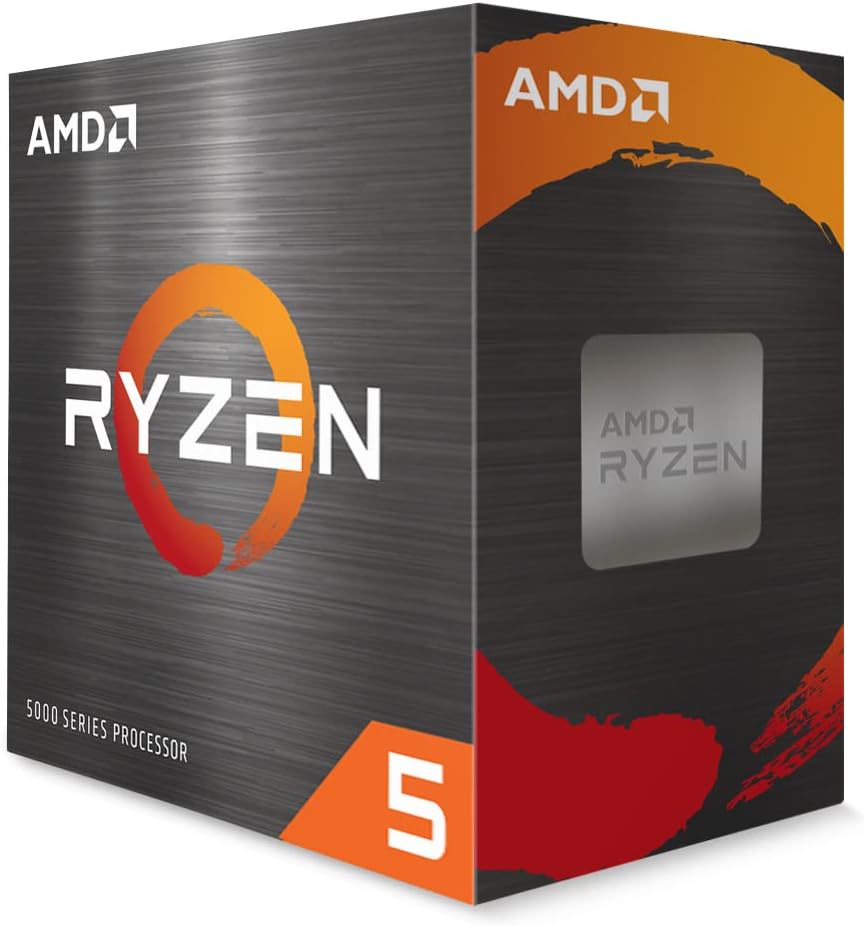
The AMD Ryzen 5 5500 stands out as a top contender for those needing efficient yet powerful computing. With six cores and twelve threads, it handles demanding workloads while keeping energy usage reasonable. The included Wraith Stealth cooler simplifies installation for first time builders.
We may earn a commission when you buy through this link, at no additional cost to you.
Its unlocked nature allows enthusiasts to tweak speeds for extra headroom when needed. The high boost clock ensures snappy single core performance for gaming and responsive interfaces. This chip bridges the gap between entry level and mainstream desktop processors effectively.
One consideration is the need for a separate graphics card since it lacks integrated graphics. Also, the AM4 socket means you are on a legacy platform with fewer future upgrade paths compared to newer architectures. Still, value remains high.
Perfect for budget gaming rigs or content creation stations needing more than basic capability. If you prioritize raw processing power per watt and value a complete boxed solution with cooling, this Ryzen processor is a compelling choice.
Delivers fast frame rates in popular titles when paired with a capable discrete graphics card for visual processing.
Modern architecture ensures better performance per watt compared to older generations, reducing electricity costs over time.
We may earn a commission when you buy through this link, at no additional cost to you.
For strict budgets, the Intel Celeron G5900 offers a balanced entry point into modern desktop computing. It provides dual core capability at a very accessible price point while maintaining low power consumption. This makes it ideal for basic office tasks and web browsing.
We may earn a commission when you buy through this link, at no additional cost to you.
The processor supports Intel Optane Memory which can boost system responsiveness when paired with slower storage drives. Its compatibility with 400 series chipsets ensures broad motherboard availability for upgrades. The 58W TDP keeps cooling requirements minimal.
Multitasking is somewhat limited due to the absence of hyperthreading. Heavy workloads like video editing or complex simulations may struggle with only two threads. However, for everyday productivity this limitation is rarely noticeable for typical users.
Best suited for point builds, school projects, or lightweight home servers. If your primary goal is cost efficiency and low electricity usage without sacrificing basic speed, this Celeron model delivers reliable results for the price.
Handles document editing, web surfing, and email efficiently without wasting energy on unnecessary computational resources.
Optane support helps accelerate boot times and file access speeds when used with compatible storage configurations.
We may earn a commission when you buy through this link, at no additional cost to you.
The Intel Core i7-2600S was designed specifically to provide high performance with reduced power consumption. Its quad core architecture handles complex data tasks well while keeping heat generation manageable. This legacy part is now rare but valued by specific enthusiast groups.
We may earn a commission when you buy through this link, at no additional cost to you.
It supports three channels of DDR3 memory which delivers excellent bandwidth for data intensive applications. The optimized cache subsystem improves efficiency across multi-threaded workloads. These traits made it a favorite for quiet media centers back in its day.
Modern software may not leverage its full potential compared to newer silicon. Finding a brand new unit is challenging, and pricing reflects scarcity rather than utility. Users must also source compatible older motherboards which might be outdated.
Recommended only for specific retro builds or systems needing DDR3 support. If you need a proven low power quad core for an existing platform, this model remains efficient, but modern alternatives offer better value and features.
Superior memory bandwidth ensures quick data access for calculations and rendering tasks in supported environments.
Lower wattage allows for passive cooling options in well designed cases without noise penalties.
We may earn a commission when you buy through this link, at no additional cost to you.
The AMD Athlon 200GE brings integrated Radeon Vega graphics to a low power package. This eliminates the need for a dedicated graphics card for basic visual tasks. It is perfect for systems where cost and size are paramount concerns.
We may earn a commission when you buy through this link, at no additional cost to you.
With two cores and four threads, it manages daily computing needs smoothly. The included near-silent cooler ensures the system stays quiet during operation. Its AM4 socket allows for future upgrades to Ryzen processors if needs grow.
Gaming performance is limited to very light titles due to modest graphics capabilities. Heavy media editing will also strain the CPU quickly. It is strictly a budget solution for productivity and media consumption rather than creative work.
Ideal for office kiosks or budget home PCs needing a single component solution. If you require a silent low power system for web use and video playback, this Athlon delivers value and simplicity effectively.
Built in Radeon graphics allow video playback and light gaming without extra hardware expenses.
AM4 socket compatibility means you can swap to a stronger Ryzen CPU later without changing the motherboard.
We may earn a commission when you buy through this link, at no additional cost to you.
This Intel Celeron G3900 offers a straightforward solution for basic computing requirements. It features a dual core design that handles essential tasks efficiently while keeping power consumption low. The retail packaging simplifies the buying process for individual consumers.
We may earn a commission when you buy through this link, at no additional cost to you.
It uses the LGA1151 socket which is common on older budget motherboards. This compatibility makes it easy to find boards that work with this CPU. The direct media interface ensures stable internal communication for system stability.
While it lacks advanced features found in newer chips, it remains stable for light duty work. Users should expect limitations when running multiple heavy applications simultaneously. It is best viewed as a stopgap or entry level component.
Recommended for educational labs or home servers needing minimal power draw. If you need a functional CPU for simple tasks without spending much, this G3900 provides a reliable and cost effective solution.
Extremely low price point makes it accessible for large scale deployments or tight individual budgets.
Proven Skylake architecture ensures reliable performance for standard office applications and browsing.
We may earn a commission when you buy through this link, at no additional cost to you.
The Intel Celeron G4900 provides a slight speed increase over lower T models. It delivers a 3.1GHz base frequency suitable for responsive desktop use. The package includes a thermal solution which reduces assembly complexity for users.
We may earn a commission when you buy through this link, at no additional cost to you.
Compatible with Intel 300 series chipsets, this CPU fits well into many affordable workstation builds. Its 54W TDP ensures it runs cool enough for passive cooling solutions in specific designs. This makes it versatile for compact cases.
Without hyperthreading, multitasking is limited compared to four thread parts. Heavy workloads like compiling code will take longer than on multi-core alternatives. However, for typical office software it performs adequately.
Best for small business PCs or home office setups needing reliability. If you want a CPU that comes ready to install and runs quietly with low energy usage, this G4900 is a solid choice for daily tasks.
Included thermal solution means less hassle during build as you do not need to buy a separate fan.
Low thermal design power allows for smaller power supplies and quieter fans in the final system build.
We may earn a commission when you buy through this link, at no additional cost to you.
This variant of the Celeron G3900 is noted for supporting ECC memory which adds stability. It is often chosen for home servers where data integrity is crucial. The low power rating helps keep operational costs minimal over time.
We may earn a commission when you buy through this link, at no additional cost to you.
Integrated graphics assist in basic display output without extra cards. The CPU only package indicates you must source your own cooling solution. This offers flexibility for those who prefer custom cooling setups or specific form factors.
Performance is adequate for web serving and file sharing but not for heavy computation. The 51W TDP ensures it stays cool even in enclosed server cases. It remains a cost effective choice for specific network roles.
Ideal for budget NAS or firewall appliances needing reliable uptime. If you need a low power CPU that handles memory errors gracefully for critical data tasks, this processor provides essential value at a low price.
ECC support helps prevent memory errors which are critical for database and file server stability.
Minimal power draw ensures the server can run continuously without excessive heat or electricity bills.
We may earn a commission when you buy through this link, at no additional cost to you.
The Intel Celeron G5905 offers a higher base clock of 3.5GHz for snappier performance. It uses the LGA1200 socket which supports newer chipsets for broader motherboard choices. The boxed packaging typically includes necessary documentation and warranty support.
We may earn a commission when you buy through this link, at no additional cost to you.
This processor fits well into entry level desktops that require slightly more speed than older models. It remains efficient in power usage while providing a solid frequency for basic applications. It is a logical step up from prior generations.
It lacks overclocking capabilities which limits enthusiasts. However, for standard office or home use, the factory locked state ensures stability. The higher clock helps reduce load times for simple tasks compared to slower equivalents.
Best for new builds or system refreshes needing a reliable basic CPU. If you want a balanced low power option that offers good speed for daily use, this G5905 provides a safe and efficient choice for most users.
3.5GHz clock ensures better responsiveness for apps that rely on single thread speed than lower models.
LGA1200 socket gives you access to newer motherboards and future upgrade options compared to legacy chips.
We may earn a commission when you buy through this link, at no additional cost to you.
This Mini-ITX motherboard comes with a quad-core low power CPU integrated for ultimate convenience. It includes dual high-speed LAN ports and robust storage options making it perfect for servers. The compact design saves space while delivering professional capabilities.
We may earn a commission when you buy through this link, at no additional cost to you.
The CPU features a turbo frequency up to 3.9GHz and supports virtualization technologies like VT-x. This allows running multiple operating systems efficiently on a single physical machine. High-speed LAN ensures rapid data transfer for network tasks.
There are known sleep mode bugs that require patience during boot processes. Also the setup involves multiple power connections which can be complex. However, the performance per watt is excellent for dedicated appliances.
Ideal for homelab enthusiasts and small business firewall deployments. If you need a ready-made solution for networking and storage with low power draw and compact size, this system offers significant value despite minor quirks.
Dual 2.5GbE ports provide fast reliable connections essential for modern NAS and security appliances.
Full support for virtualization technologies allows efficient running of multiple systems on one hardware unit.
We may earn a commission when you buy through this link, at no additional cost to you.
Selecting the right low power CPU depends on your specific use case and performance needs. Consider these key factors to ensure you find a processor that balances efficiency with capability.
TDP indicates the maximum heat output in watts. Lower TDP CPUs require less cooling and consume less electricity which is vital for silent systems.
Look for TDP values under 65W for efficient operation without bulky cooling solutions.
More cores allow handling multiple tasks at once. Dual core is fine for basic use but quad core or higher helps with multitasking.
Choose at least four cores if you plan to run virtualization or heavy productivity applications.
Ensure the CPU socket matches your motherboard. LGA1151 and AM4 are common but legacy sockets may limit future upgrades.
Verify chipset support before purchasing to avoid compatibility issues during installation.
Some CPUs include graphics which saves cost on a separate card. This is useful for media centers and office PCs.
Select a model with integrated graphics if you do not plan to install a dedicated GPU.
Platforms like AM4 allow easy swaps to newer Ryzen processors. Legacy Intel sockets may limit options significantly.
Prioritize sockets that offer future upgrade paths to extend system lifespan.
Base and boost clocks determine how fast the processor runs. Higher speeds improve responsiveness for single thread tasks.
Look for base frequencies above 3GHz for smooth everyday performance.
Retail boxes include coolers while trays do not. Always check if a cooler is needed before buying.
Choose boxed versions if you want a complete solution out of the box.
Features like ECC support or virtualization extensions add value for specific workloads.
Check for these traits if you need data integrity or run multiple operating systems.
Install the CPU carefully by aligning the notches on the chip with the socket pins. Avoid applying pressure to the pins themselves to prevent damage during installation.
Apply thermal paste evenly to the heat spreader before attaching the cooler. Proper paste application ensures heat transfers efficiently to the cooling solution.
Keep the case vents clean to prevent dust buildup which traps heat. Regular cleaning maintains stable temperatures and extends the lifespan of your hardware.
A low power CPU consumes less electricity and generates less heat. This leads to quieter operation and lower energy costs which is ideal for home servers or compact builds.
Most low power models are locked to maintain efficiency. Only specific unlocked versions allow frequency tweaks which may increase power draw slightly.
Look for models with ECC memory support and integrated graphics. Options like the Mini-ITX system offer network ports and storage efficiency tailored for NAS tasks.
Check if the product description includes a Wraith Stealth or stock cooler. Retail packages typically include fans while trays usually require separate purchase.
Integrated graphics handle light gaming and video playback well. For high performance gaming a dedicated graphics card is necessary even with a low power CPU.
Thermal Design Power measures heat output in watts. Lower TDP means less heat and power usage which simplifies cooling and reduces electricity bills.
This guide covers ten diverse low power CPUs ranging from basic dual cores to efficient quad core options. Each pick targets specific needs from budget office tasks to advanced home server setups.
Prioritize TDP and core count based on your workload. If you need silent operation focus on lower TDP while heavier tasks demand more cores and threads.
Remember that prices and availability change frequently so verify current details on Amazon. Use this list as a starting point to find the perfect processor for your energy efficient build.