
Sntieecr STEM Kit
4.2Editor score
Motor focused
Includes clips
Low cost
Compare top electricity learning kits for students and kids to find the best science experiments for home and classroom educational projects.
Electricity learning kits provide hands-on ways for students to explore circuits and magnetism through safe experiments.
We compared ten top kits based on project variety, instruction quality, safety, and educational value for different age groups.
Each pick highlights key features and uses while noting that availability and shipping details may change over time.
4.2Editor score

4.7Editor score

4.5Editor score
This side-by-side comparison summarizes the key specifications and focus areas of each kit to help you choose the right learning tool.



This kit offers a solid introduction to electricity and magnetism principles for students in grades 9 to 11 with a 4.5 rating.
We may earn a commission when you buy through this link, at no additional cost to you.
It includes 56 items for electricity and 21 for magnetism allowing learners to build series circuits parallel circuits and electromagnets using a color manual.
The storage bag keeps components organized while the manual explains basic principles though batteries are not included for power.
Students seeking a straightforward way to explore fundamental physics concepts will find this kit practical and easy to use for school projects.
The high number of items supports repeated experimentation and multiple builds without needing additional parts.
Full color manuals guide students through each experiment ensuring they understand the underlying principles.
We may earn a commission when you buy through this link, at no additional cost to you.
This kit provides eight fun and educational experiments designed to teach kids and teens about circuits with a 4.5 rating.
We may earn a commission when you buy through this link, at no additional cost to you.
Projects include series parallel circuits and fruit battery experiments supported by an engaging circuit book that encourages problem-solving and creativity.
While the battery requirement means extra cost the hands-on nature makes it ideal for science fairs or home learning for ages 8 to 14.
Learners looking for simple yet interactive ways to explore conductivity and energy will appreciate the variety of light up experiments here.
The detailed circuit book guides users step by step through each experiment ensuring success and understanding.
Experiments like fruit battery show how electricity can be generated from everyday materials.
We may earn a commission when you buy through this link, at no additional cost to you.
With over 120 fun projects this kit is the top choice for keeping kids occupied while learning how circuits work with a 4.7 rating.
We may earn a commission when you buy through this link, at no additional cost to you.
Users can build sound systems light shows and copters using components that snap together securely without any tools needed.
Safe kid-friendly video instructions and illustrated guides make learning easy while the toy of the year award reflects its quality.
Families wanting a versatile and safe resource for long-term exploration of electrical engineering will find this kit outstanding.
The sheer number of projects ensures that users stay engaged for hours without running out of ideas.
No tools needed means younger children can participate safely without adult help for assembly.
We may earn a commission when you buy through this link, at no additional cost to you.
This bundle offers more than 50 do-it-yourself experiments with unique items like light control led and magnetic switch with a 4.4 rating.
We may earn a commission when you buy through this link, at no additional cost to you.
A well written manual explains why experiments work guiding students to discover and explore beyond the listed projects for deeper learning.
The solid storage case keeps all 55 items organized making it easy to take outside to play with friends or classmates.
Students interested in physics science or looking to understand circuit boards better will find this set an entertaining concrete education.
The manual goes beyond steps to explain principles helping students truly grasp the science behind each build.
Items have fixed places in the case preventing loss and damage during transport or storage.
We may earn a commission when you buy through this link, at no additional cost to you.
This popular science experiment kit inspires kids to build basic electrical circuits with motors and bulbs rated at 4.2.
We may earn a commission when you buy through this link, at no additional cost to you.
It includes enough accessories like clips bulbs and motors for school projects encouraging children to turn new ideas into reality.
Users should note the voltage warning to prevent overheating and short circuits during extended use which requires supervision.
Young learners seeking an affordable entry point into engineering and science projects will find this kit suitable for curiosity.
The variety of parts allows kids to invent their own circuits beyond just following standard patterns.
Clear warnings help teach responsibility when handling electrical components to avoid heat or short circuits.
We may earn a commission when you buy through this link, at no additional cost to you.
This comprehensive 50-piece set with a 40-page manual fosters curiosity through 18 hands-on experiments like fruit battery and electric bell rated 4.4.
We may earn a commission when you buy through this link, at no additional cost to you.
Components include ammeters and voltmeters making it a great tool for family science activities that encourage observation and critical thinking.
The manual guides users through discovery making it an ideal birthday or school project gift for curious kids 8 and older.
Parents looking for a safe educational gift that brings the family together for science will appreciate this complete kit.
The design encourages parents to work with kids turning learning into a shared activity.
Real instruments like voltmeters give a more authentic lab experience than toy parts.
We may earn a commission when you buy through this link, at no additional cost to you.
Ideal for junior and senior high school students this kit helps learners explore electric circuits and magnetic fields with a 4.5 rating.
We may earn a commission when you buy through this link, at no additional cost to you.
It includes unique items like sensitive ammeter and magnetically controlled switch to support deeper study of physics in a practical way.
A double-layer storage box keeps items organized and portable making it easy to carry out to play with friends or classmates.
Students who want to go beyond class basics and conduct unique experiments will find this kit highly suitable.
Unique modules like Joule law experiment allow for more advanced study than typical toy kits.
The sturdy storage box ensures components stay safe during transport to clubs or events.
We may earn a commission when you buy through this link, at no additional cost to you.
This safe introductory kit helps students consolidate textbook knowledge and gain deeper understanding of current basics with a 4.6 rating.
We may earn a commission when you buy through this link, at no additional cost to you.
English instructions make it easy to assemble series and parallel circuits improving hands-on ability and creativity for grades 7 to 9.
All accessories come in a plastic storage box for easy storage though users must provide their own batteries.
Younger learners looking for a gentle introduction to electricity rules will find this kit helpful and affordable.
The kit is designed to support classroom learning making it great for students needing extra practice.
Clear English instructions reduce confusion so students can focus on learning concepts.
We may earn a commission when you buy through this link, at no additional cost to you.
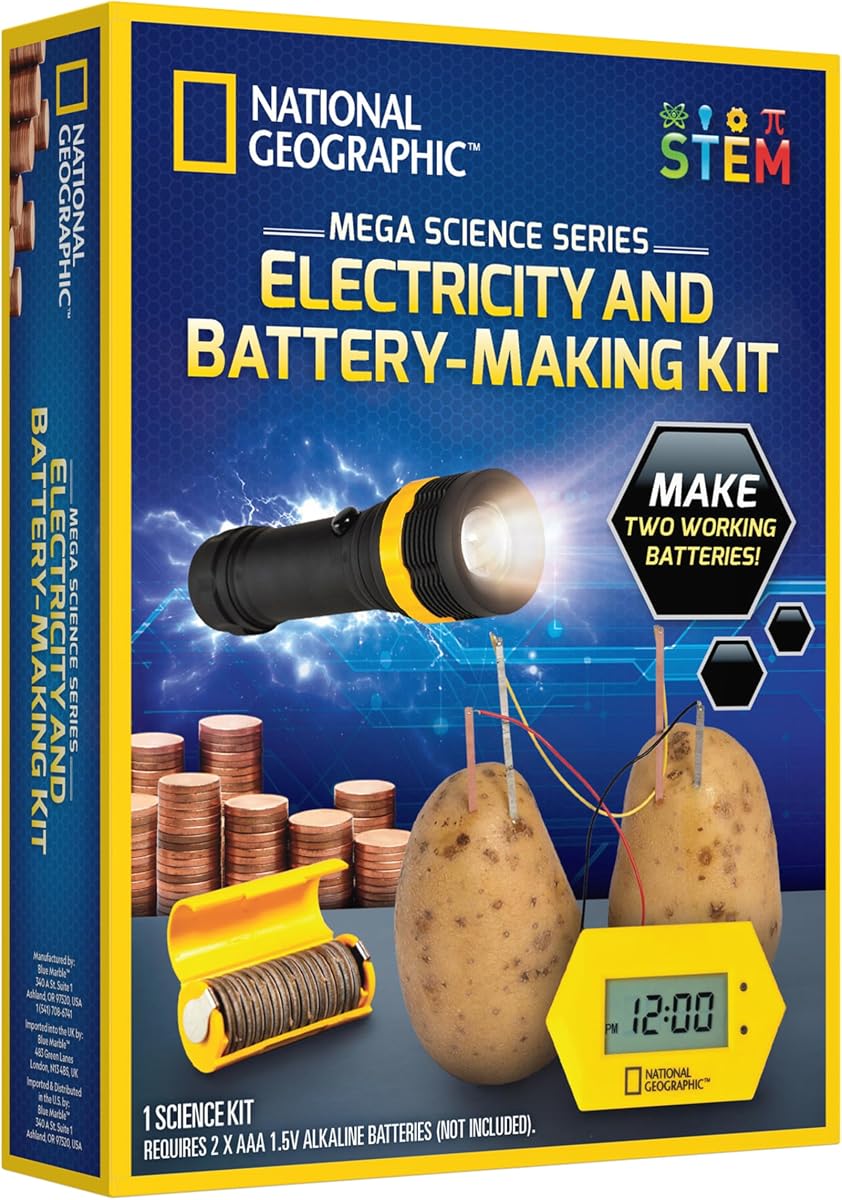
This science kit teaches kids about electricity with 2 STEM projects including a potato clock and penny flashlight with a 4.5 rating.
We may earn a commission when you buy through this link, at no additional cost to you.
Detailed learning guide provides insight into circuits and electrical engineering while easy steps let kids get started with two potatoes.
The combination of labs makes learning fun and memorable giving curious kids a chance to see circuits come to life.
Children interested in batteries and how energy works will find this focused kit an engaging and award winning gift.
The projects specifically target energy storage and generation making it great for understanding power sources.
Creating a working clock from a potato is a memorable experience that sparks interest in science.
We may earn a commission when you buy through this link, at no additional cost to you.
This kit provides a hands-on opportunity for students in grades 7 to 11 to build simple electrical and magnetic models with a 4.4 rating.
We may earn a commission when you buy through this link, at no additional cost to you.
It includes switches wires and LEDs to build projects like traffic lights and electromagnets with a manual that guides learning and exploration.
Components store in a transparent box for easy access and organization though users must provide batteries for power.
Educators and students seeking an upgraded kit to support more varied projects will find this set a solid choice.
The upgrade kit includes better components to support more complex and varied projects.
The manual and components are designed to support teacher led or student led projects easily.
We may earn a commission when you buy through this link, at no additional cost to you.
Selecting the right kit depends on age, project count, safety, and specific learning goals to ensure the best educational experience.
Look for kits rated for your child's grade level to ensure the concepts match their cognitive abilities and skills.
Most kits list age ranges such as 8-14 or 7th-11th grade to guide safe and effective learning.
A higher count of projects means more opportunities for learning and repeated use without losing interest quickly.
Choose kits that offer diverse builds like motors sound systems or batteries to cover multiple physics concepts.
Clear full color manuals with illustrated steps or video codes are essential for independent learning and success.
Well written guides explain why experiments work to deepen understanding beyond just assembly.
Check for components designed for safety and clear warnings about batteries heat or short circuits to protect users.
Safe materials and secure connections ensure that experiments are enjoyable without unnecessary risks.
More items and parts allow for multiple simultaneous builds and reduce the need to buy extra components later.
Look for sets that include bulbs motors clips and storage solutions for a complete experience.
Kits with sturdy cases or storage boxes help keep parts organized and make it easy to transport for science fairs.
Organized storage prevents loss and keeps components ready for future learning sessions.
Some kits require batteries while others may use hand cranks so check what power sources are needed before buying.
Understanding power needs helps you plan for ongoing costs and setup requirements.
Decide whether you want basic circuits electromagnetism or battery experiments to match specific curriculum goals.
Kits with physics lab focus are better for older students while simple bulb kits suit younger learners.
Start by reading the manual to understand all components and their roles in experiments before connecting anything.
Follow the step-by-step instructions carefully and avoid mixing batteries of different types or ages during experiments.
Store all parts in their original storage box after use and keep batteries separate to prevent corrosion or damage.
Most kits do not include batteries so you should check the product details before purchase. Some include battery holders and you must buy the required AA or AAA batteries separately.
Kits are designed for ages 8 to 18 depending on complexity. Simpler bulb kits suit younger children while physics lab kits fit high school students.
Yes many kits are ideal for science fairs clubs and school units. Teachers use them to demonstrate circuit basics and electromagnetism principles.
Most kits use safe low voltage components designed for children. Always follow safety warnings and supervise younger kids to prevent short circuits or overheating.
Many modern kits require no tools as parts snap together. Some older or specific kits may need simple tools like screwdrivers for certain connections.
Quality kits can last for years if stored properly. Components like bulbs and switches may wear out after repeated use and might need replacement.
The top picks like the National Geographic and EUDAX kits offer great project variety and clear instruction for most students.
Focus on kits with safe components and quality manuals to ensure that learning is effective and enjoyable for all ages.
Remember to check current availability and shipping details before purchasing to find the best value for your needs.